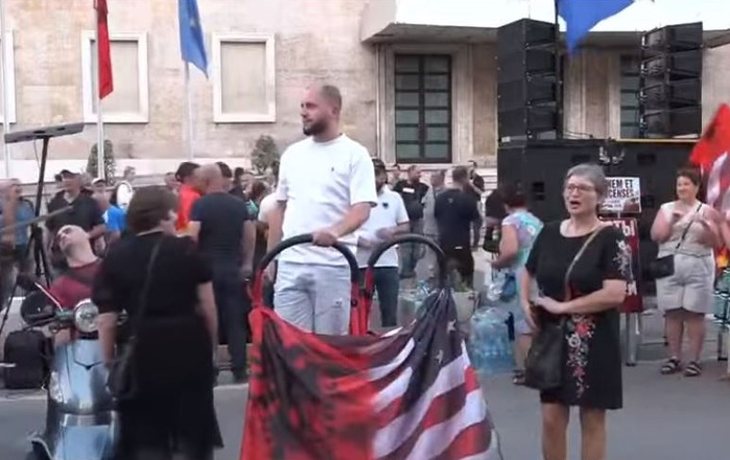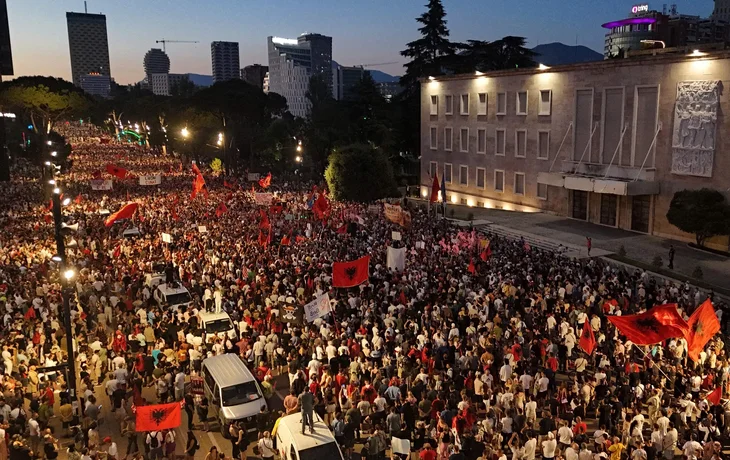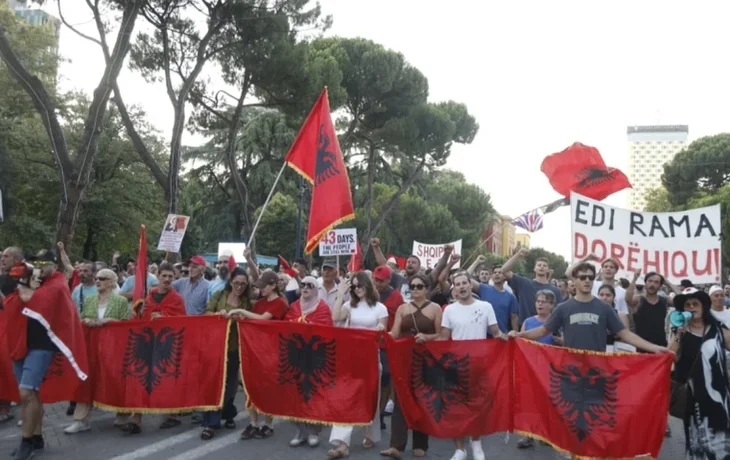
By Anja Troelenberg, MRD.de / Every evening around 7 p.m., the same scene unfolds in Tirana: people flock to the boulevard in the city center. Some carry foam flamingos on broomsticks, others banners and flags. The flamingo has become a symbol of a protest that began in the Vjosa-Narta nature reserve and now extends beyond the conservation of a river delta and a lagoon.
"At first I was surprised by the crowds, but I'm slowly getting used to it," says ornithologist Joni Vorpsi. For years he has fought to preserve one of the last largely undeveloped river deltas on the Adriatic - a landscape of dunes, beaches and pine forests, home not only to flamingos but also pelicans and sea turtles. "We demand that the project not be implemented there."
In Albania, it was long difficult to mobilize people for environmental issues. Anyone who protested against resorts, roads or airports was quickly labeled as someone who wanted to hinder development and progress. For Joni Vorpsi and other environmentalists, this fight was for a long time a lonely one.
Trump's son-in-law, Jared Kushner, as an investor
The fact that on some evenings more than 10,000 people take to the streets is also due to the well-known investor behind the project: Jared Kushner, son-in-law of US President Donald Trump.
Since his investment firm, Affinity Partners, first unveiled the plans in March 2024, international media have been reporting on the project. It is now known that the complex will span two locations: a part of the Vjosa-Narta nature reserve on the mainland and the nearby island of Sazan. The plans include not only hotels and private villas, but also a marina, a water park and a casino.
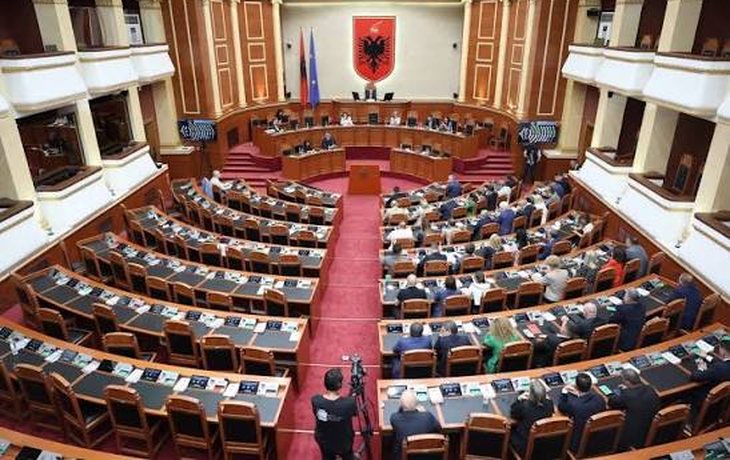
The project was also made possible by a change in the law in 2024. Prime Minister Edi Rama’s Socialist Party, which had an absolute majority at the time, changed the law to allow so-called “strategic investors” to build in protected areas. A few months later, a company suspected of being linked to Kushner’s investment fund was granted precisely this status.
Who owns the coast of Albania?
Në maj të këtij viti, buldozerët kaluan papritur nëpër Pishë Poro-Nartë, pjesë e zonës së mbrojtur. Një pjesë e plazhit, e cila më parë ishte e aksesueshme lirisht, ishte e rrethuar, edhe pse nuk ishte kryer as leje ndërtimi dhe as vlerësim i ndikimit në mjedis. Ndonjë seancë dëgjimore publike nuk ishte zhvilluar kurrë. Kështu, disa dhjetëra aktivistë udhëtuan nga Tirana për në deltë, rreth 2 orë e gjysmë larg me makinë, hynë në zonën e rrethuar dhe kërkuan ndërprerjen e menjëhershme të ndërtimit.
Protesta u rrit ndjeshëm vetëm pasi një video nga kjo zonë u bë virale. Ajo tregon rojet e sigurisë nga një kompani private duke zvarritur një protestues mbi rërë - pikërisht përpara policisë. Që atëherë, shumë shqiptarë nuk pyesin më vetëm për mbrojtjen e një ekosistemi, por edhe se kush mund të vendosë për zonat bregdetare që më parë ishin të aksesueshme lirisht.
Pronësia e tokës në zonën e projektit është e diskutueshme. Qeveria thekson se toka është në pronësi private. Megjithatë, është e paqartë se kush zotëron ligjërisht parcela individuale - dhe si kanë ndërruar ato pronarë vitet e fundit. Banorët e fshatit fqinj të Zvërnecit gjithashtu pretendojnë pjesë të tokës.
Më shumë sesa një protestë mjedisore
"Një moment historik", kështu e përshkruan atë historiani Elidor Mëhilli i “Hunter College” në Universitetin e Qytetit të Nju Jorkut, aktualisht në Tiranë. Herën e fundit që Shqipëria pa tubime të qëndrueshme të kësaj madhësie ishte gjatë protestave studentore të vitit 1990, të cilat kontribuan në përmbysjen e regjimit komunist.
Por vetëm projekti i ndërtimit nuk është më problemi, shpjegon Mëhilli. Ajo që po shpërthen në rrugë është një frustrim që është grumbulluar prej vitesh: ndjesia se njerëzit po humbasin kontrollin e vendit të tyre. Në një farë mënyre, qeveria e Edi Ramës, në pushtet që nga viti 2013, tani është viktimë e suksesit të vet. Ajo nxiti turizmin dhe e bëri vendin tërheqës për investitorët, por jo të gjithë kanë përfituar njësoj nga kjo rritje. Strehimi i përballueshëm po bëhet gjithnjë e më i rrallë në Tiranë dhe shumë të rinj shohin pak të ardhme për veten e tyre në vendin e tyre.
Pronat në hetim
Protestat morën më shumë vrull kur Zyra e Prokurorit të Posaçëm të Shqipërisë (SPAK) njoftoi se kishte kërkuar urdhër-arreste kundër 20 të dyshuarve që dyshohet se i përkasin një rrjeti ndërkombëtar të trafikut të drogës. Sipas hulumtimit nga rrjeti hetimor BIRN, dosjet e hetimit përmendin gjithashtu prona ku planifikohet të ndërtohen pjesë të resortit luksoz. Megjithatë, deri më tani, nuk ka prova që Jared Kushner ose kompania e tij ishin në dijeni të ndonjë shkeljeje të mundshme ligjore ose ishin vetë të përfshirë në ndonjë krim të dyshuar.
In Albania, the investigation is also being closely watched because Affinity Partners has already pulled out of another controversial construction project in the region: In Belgrade, the company planned to build a luxury complex on the territory of the former headquarters of the Yugoslav General Staff. After Serbian prosecutors accused government officials of abuse of power and falsification of documents related to the preservation of historical monuments, Affinity Partners withdrew.
A new culture of protest in Albania
Another evening, several thousand people gathered again in Tirana. After weeks of protests, the anger and fatigue were palpable. "We've had enough. This government doesn't love the country; it will plunder it," says a young woman in a hoarse voice. "Now it's about overthrowing the system," a father explained. "Revolution!" and "Edi Rama resign!" the crowd chanted.
Among them is Besjana Guri. "I barely sleep anymore. My whole daily life revolves around daily protests," says the environmental activist, hoisting a bag containing a projector onto her shoulder. Just moments earlier, she had used it to project the message "Hands off Narta" onto the facade of Prime Minister Rama's official residence. Even if not all of their demands can be met, something has already been achieved, says Guri: "The mere fact that we have developed a new culture of protest gives hope - and shows that young people can make a difference."
But the new protest culture is not without tension. In early July, about a month after the protests began, clashes broke out: Individual demonstrators threw stones, eggs and bottles, and police used tear gas, pepper spray and water cannons. "It is important that we do not lose sight of our goal now and continue the protest as peacefully as it began," says Guri. ©Albanian adaptation LAPSI.al