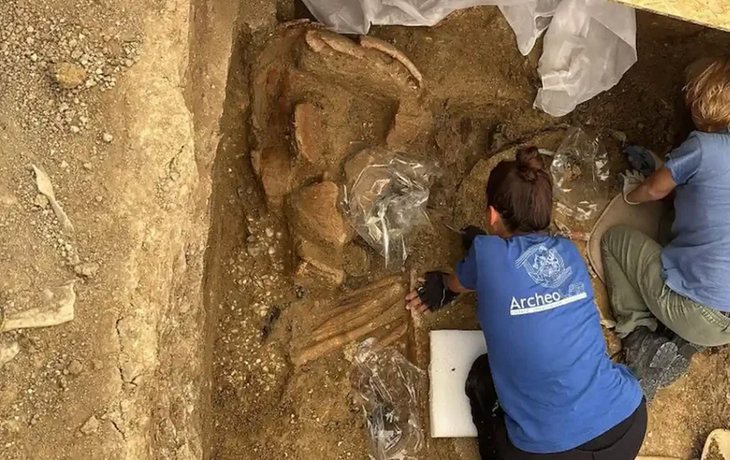
Archaeologists have discovered hundreds of ancient, monumental geometric structures carved into the ground in the Amazon, suggesting the existence of complex societies in the rainforest about 1,000 years before the arrival of Spanish and Portuguese colonialists.
The research, published in the scientific journal Nature, reveals circles, squares and other geometric shapes, some of which are connected by roads, hidden beneath the dense forest vegetation. In total, almost 400 previously unknown earthworks have been identified.
Many of them belong to the category of so-called geoglyphs and date from 600 BC to 850 AD. The findings reinforce evidence that overturns the long-held perception that the Amazon was a virtually virgin and uninhabited area before the arrival of Christopher Columbus and Europeans in the 15th century.
To "see" under the dense vegetation cover, near the borders of Bolivia, Brazil and Peru, the researchers used laser scanning technology, which allows three-dimensional mapping of the ground even under dense vegetation and is widely used by archaeologists around the world to identify monuments that are invisible to the naked eye.
The geometric structures consist of mounds, artificial hills, and channels and vary in size. Most cover about 28 hectares, while many have channels about 9 meters wide and up to 4.5 meters deep. The largest structure extends over more than 485 hectares.

"This is a particularly important and ambitious study which reveals the impressive scale of human landscape formation in the southwestern Amazon before the arrival of Europeans," said archaeologist José Iriarte from the University of Exeter, who was not involved in the research. He added that further excavations are needed to clarify the use of the geoglyphs, which are still shrouded in mystery, as it is not yet known whether they were associated with settlements, rituals or other activities.
Based on the oral traditions of the indigenous Apuriña people, who live in the center of the area where the structures were found, researchers estimate that these spaces served multiple functions.
"We are almost certain that they were used for celebrations, political rallies, ceremonies, dancing, music, but also competitions, such as ball games," said the head of the study, Martti Pershinen, professor emeritus at the University of Helsinki.

Studiuesit ia atribuojnë strukturat një qytetërimi të lashtë të panjohur më parë, të cilin e kanë quajtur Aquiry. Sipas Dr. Pershinen, ishte një shoqëri shumëkulturore dhe shumëgjuhëshe që ndante një botëkuptim të përbashkët, gjë që reflektohet në këto qendra rituale.
Anna Roosevelt, një profesoreshë antropologjie në Universitetin e Illinois në Çikago, e cila gjithashtu nuk ishte e përfshirë në kërkim, vuri në dukje se askush ende nuk ka qenë në gjendje të shpjegojë plotësisht qëllimin ose rëndësinë e saktë të gjeoglifeve, të cilat madje mund të lidhen me vëzhgimet astronomike.
Dr. Pershinen tha se arkeologët nuk kanë gjetur prova të banimit të përhershëm në kodrat artificiale gjatë kulturës Aquiry, e cila duket se ka pushuar së ekzistuari rreth vitit 900 pas Krishtit. Gjithashtu, nuk ka prova që strukturat ishin të natyrës mbrojtëse.
Megjithatë, vendet, të cilat mbulojnë një sipërfaqe prej rreth 4400 kilometrash katrorë, përforcojnë provat se pellgu i Amazonës ishte i populluar dendur shumë shekuj para Kristofor Kolombit.
Kronistët e kohës, siç është murgu Gaspar de Carvajal, i cili udhëtoi në Amazonë në vitet 1540 me Francisco de Orellana, përshkruan një zonë "të populluar dendur", me vendbanime të mëdha që shtriheshin për kilometra pa pushim midis shtëpive.
Për shekuj me radhë, këto përshkrime u konsideruan të ekzagjeruara ose imagjinare, kryesisht sepse sëmundjet dhe kolonializmi shkatërruan popullsitë indigjene. Në të njëjtën kohë, shumë shkencëtarë e konsideronin të pamundur zhvillimin e shoqërive të mëdha pa bujqësi të stilit perëndimor, gjë që përforcoi imazhin e gabuar të Amazonës si një pyll i virgjër dhe jo si një rajon ku popullsia u zhduk pothuajse pas pushtimit evropian.

“Arkeologët vazhdojnë të zbulojnë gjëra që, sipas besimeve të vjetra, nuk duhet të kishin ekzistuar në Amazonë. Çështja nuk është toka, por mënyra se si njerëzit e përdornin pyllin”, tha Dr. Roosevelt .
Vitet e fundit, kërkimet në pjesë të tjera të Amazonës kanë zbuluar gjurmë rrugësh, kanalesh, sheshesh dhe strukturash banimi të ngritura, përfshirë Ekuadorin lindor.
Ekipi i Dr. Pershinen vlerëson se mund të ketë mijëra punime të ngjashme tokësore në rajon, duke vënë në dukje se në shumë vende bimësia është aq e dendur saqë edhe teknologjia LiDAR nuk mund të depërtojë plotësisht në gjethe.
Në të njëjtën kohë, shkencëtarët paralajmërojnë se shpyllëzimi për kulturat bujqësore ka të ngjarë të ketë shkatërruar ose dëmtuar seriozisht disa vende arkeologjike.
"Kjo trashëgimi kulturore kërcënohet seriozisht nga prerja e pemëve dhe kultivimi i sojës", tha arkeologu Eduardo Neves nga Universiteti i São Paulo.
The research team also estimates that during the height of the Aquiry culture, between 100 and 300 AD, the population in this area alone may have reached as many as three million people. These estimates are the subject of intense scholarly debate, as they are not based on excavated settlements, but on a combination of data, such as the possible number of geoglyphs and the human resources that would have been required to build and maintain them.
Despite reservations, most experts now agree that descriptions of densely populated societies in the Amazon by 16th-century European explorers were not as improbable as had been thought for generations. "It was previously believed that the Carvajal and Orellana expeditions were imagining what they were describing. But now we see that they actually saw large settlements," concluded Dr. Pershinen. ©LAPSI.al