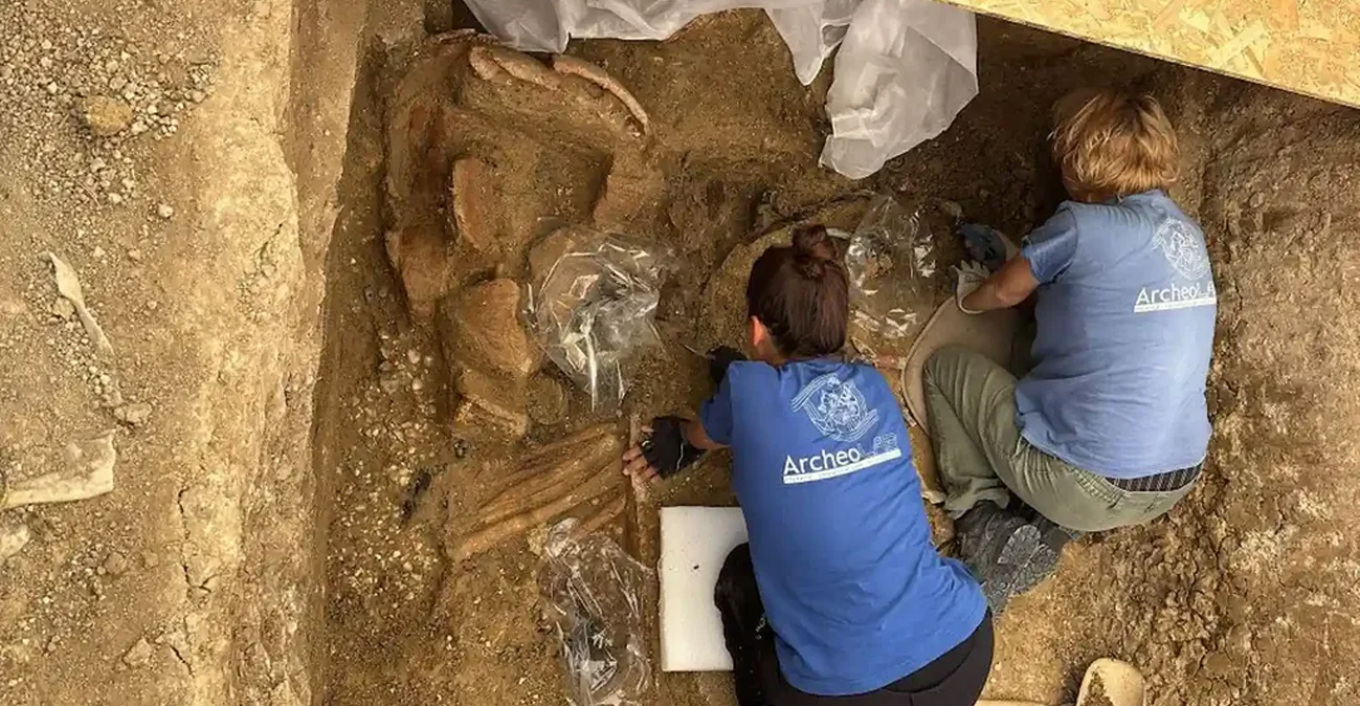
Archaeologists have made a major discovery in recent days in the municipality of Sirolo, a small town in Ancona, on the coast of Italy. They have identified the royal tomb of a pre-Roman "warrior prince" along with the remains of his chariot and weapons.
They say it is part of a royal cemetery of the Picene people from the 6th century BC, a mysterious pre-Roman culture in Italy that is little known. The discovery reveals new information about the burials of the elite rulers of that culture.
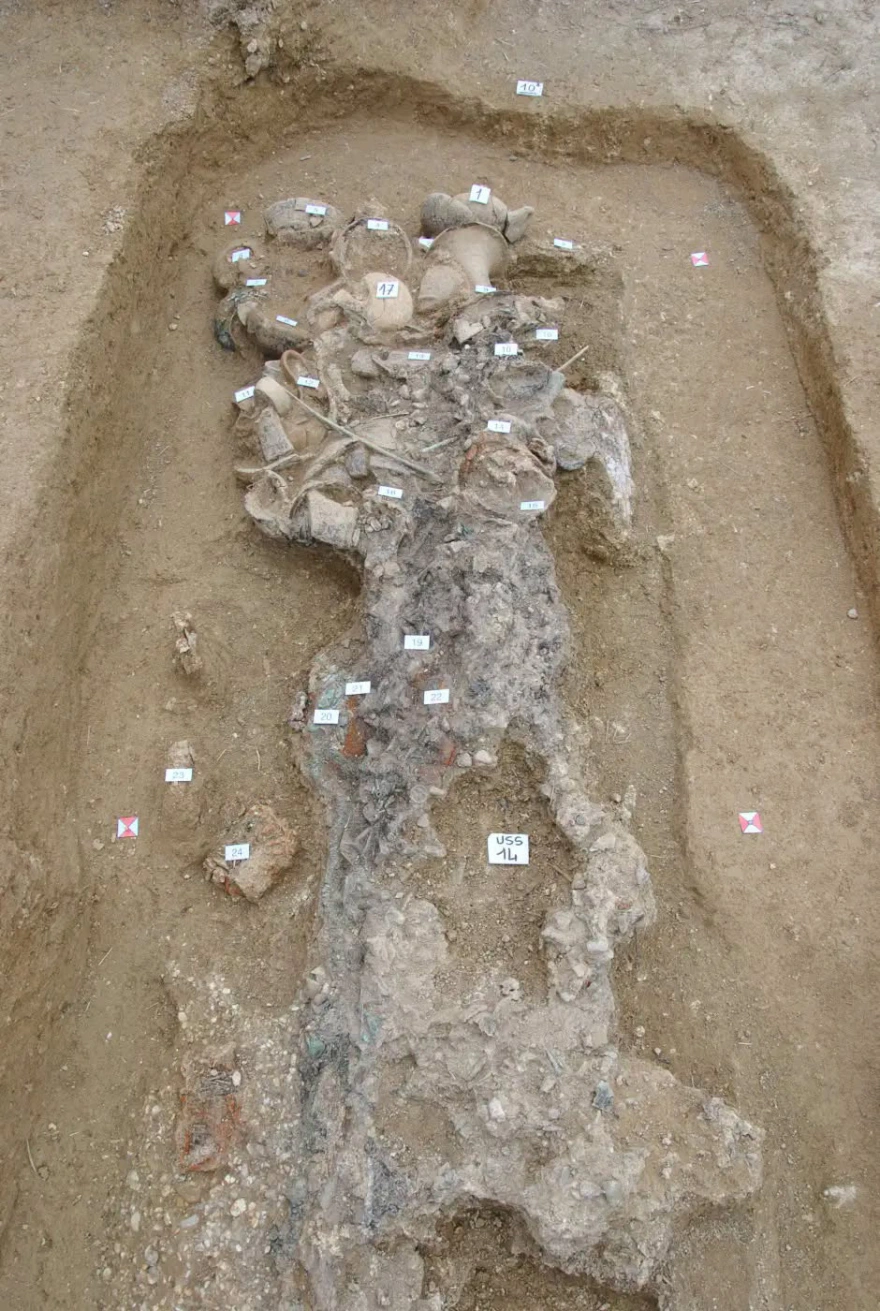
In the 6th century BC, a people called the Picenes or Picentes lived in this area, which bordered the Etruscans to the north. The Picenes left little written record, so much of what is known about this group comes from archaeological excavations.
In 2020, a "princely tomb" was discovered in the Pin cemetery, containing an iron-wheeled chariot, a collection of weapons, and a helmet. Six years later, archaeologists discovered a second one.
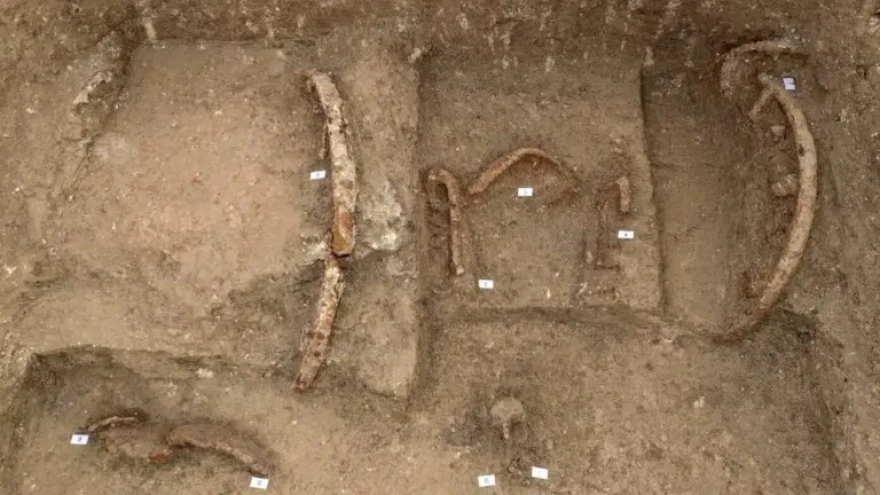
Now researchers have discovered a large male tomb with a two-wheeled chariot that was buried intact with the nobleman about 2,500 years ago. The warrior prince was also buried with a helmet and an axe, as well as several bronze vessels sealed with ceramic lids and filled with organic remains, which could be traces of a funeral or food offerings for the afterlife.
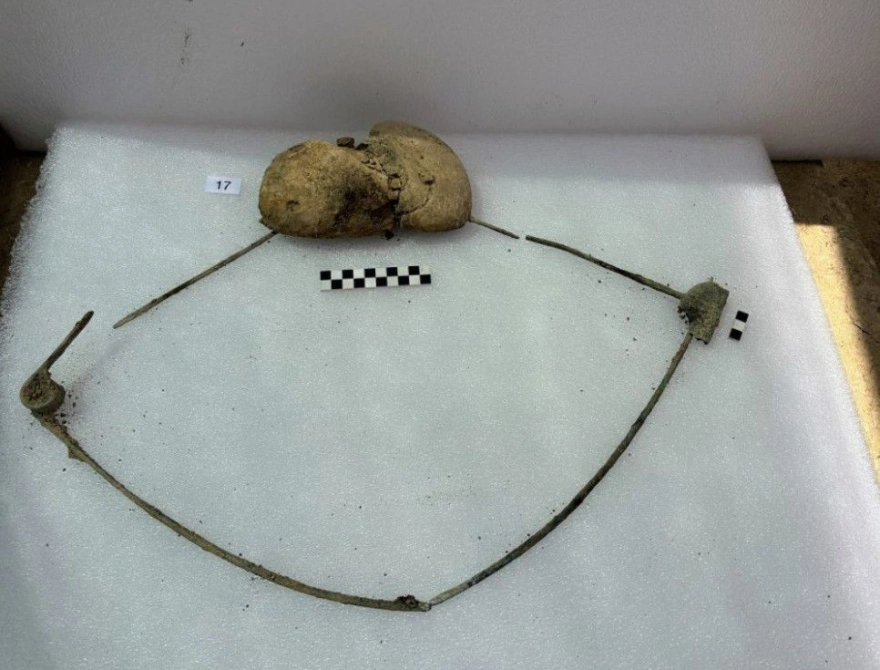
Next to the warrior prince was the tomb of a woman buried with clothes, shoes, and many "fibulae" - ancient metal safety pins that probably held her clothes and shroud together. A large fibula with a piece of amber was placed on or near her head, perhaps as part of her hairdo or as a headband.
This burial is not far from the "Tomb of the Queen" in the Pini necropolis, where in 1989, archaeologists discovered a Picene woman buried with two chariots, two mules and a large amount of personal belongings. This tomb surprised archaeologists because of its unusual shape. ©LAPSI.al