1.
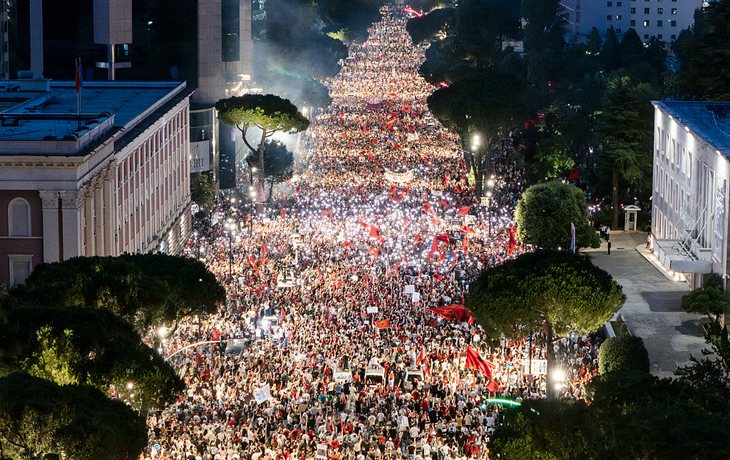
Prime Minister Rama gathered the socialist leadership last week and presented them with a platform for governing in the fourth mandate called “BESA”. The prime minister’s speech could recall the months before the fall of the Berlin Wall, when communist leaders, after describing the protests as the activities of foreign services, began to adopt the language of the protesters in the new discourse.
Or when the protesters were divided into “patriotic socialist youth” and “reactionary forces that are using the youth”, something like today’s division between “flamingos” and “crows and ravens”.
Or when Prime Minister Rama uses a concept-word that the last communist leader of East Germany had used in 1989. In the platform document presented to the socialist leadership titled “Besa”, the subtitle is “the turn of the fourth mandate”. In 1989, Egon Krenz announced the Party’s new policy, “Wende” which in Albanian translates as “turn”.
Albania is far from East Germany in all respects. But its leaders—including the fact that the SP won multiparty elections in a NATO member state—have the same approach to the crisis: finding the answer within the current governing model. Krenz sought a “wende” within the ruling Communist Party system, “Besa” seeks a turnaround within the current hybrid model of power led by the SP.
2.
More than in the communist past, the analogy will be sought in corporate culture.
“BESA” can be read as a manual for customer care. The initial premise of this document is that “the transformation of a country and the social experience of the transformation are no longer in harmony, but in tension”. Or as Prime Minister Rama explains, the essential reason for the protest is the “paradox of success”: citizens have benefited so much from governance that their expectations have increased, which are not met by the state administration. BESA takes the transformation as a fait accompli, while it places the discrepancy in the way the citizen experiences it.
In an analogy to a telephone company that has a manual for handling customers regarding the 5G network, BESA’s “customer care” has seven tasks: listening, proving, explaining, caring, measuring, learning and predicting. This SP service must address the Party’s achievements with the citizens of the country – listening, providing proof and explanations, showing care, measuring the mood, learning from the citizens and predicting how the Party’s program, Rilindja 2.0, will be implemented further.
BESA, ngjashëm me kompaninë telefonike, e sheh qytetarin si klient që mund të ankohet për cilësinë e shërbimit, jo si bartës të sovranitetit që mund ta ndryshojë drejtimin a kompaninë/qeverinë. Ky perceptim mund të jetë njëri prej problemeve që i kanë nxjerrë qytetarët në rrugë.
Dhe vështirë se një manual për kujdesin ndaj klientit do t’i largojë prej saj.
3.
Megjithatë, kryeministri Rama ka bërë një lëvizje të madhe. Gati dy muaj pas fillimit të demonstratave ai u largua në masë të madhe nga theksi i identifikimit të protestave si prodhim i forcave të jashtme dashakeqe (Irani, serbët, vendet konkurruese në turizëm e forcave të tjera globale që bashkëpunojnë me “sorrat dhe korbat”). Ai shpalli se “flamingot” ishin pjesa kritike e shoqërisë që do të udhëzojë më tej qeverisjen socialiste.
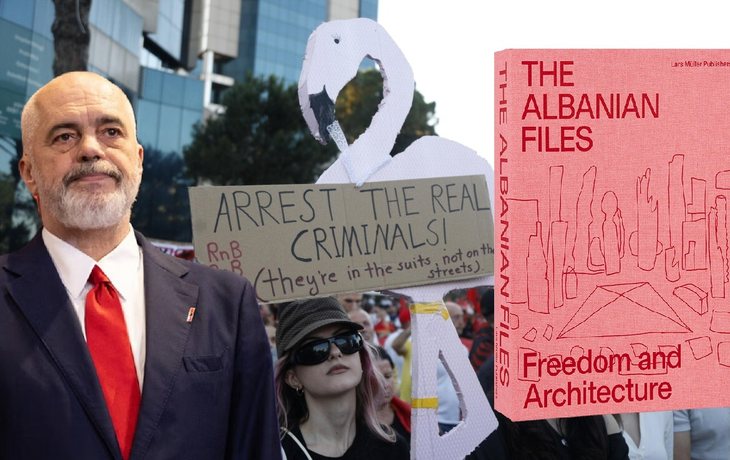
Kjo është fillimisht një manovër taktike, e cila në vend të konfrontimit përdor teknikën e absorbimit: protesta dhe protestuesit nuk kanë më nevojë ta shpjegojnë veten, sepse këtë do ta bëjë kryeministri me instrumentet e platformës “BESA”. Këtë manovër kryeministri e ka formësuar edhe në dizajnin grafik të broshurës, duke e futur flamingon në ballinë. Nga simbol i kundërshtimit, flamingoja shndërrohet në emblemë të reformimit të qeverisë që kundërshtonte. Kësisoj, ata konsiderohen tashmë të kuptuar nga kryeministri dhe Partia Socialiste. E tëra do të operacionalizohet në “kthesën qeverisëse të mandatit të katërt”.
Kjo manovër taktike është njëkohësisht edhe lëvizje strategjike.
Kryeministri Rama ka kaluar nga injorimi, refuzimi, përqeshja dhe demonizimi — mënyra të ndryshme për të treguar se protesta nuk kishte rëndësi për shumicën vendimmarrëse socialiste — në fazën e njohjes së saj si forcë ; për më tepër,duke nënkuptuar heshtazi edhe si forcë që prek stabilitetin e qeverisjes së kësaj shumice.
Ky është kalimi nga mohimi në pranimin e pjesshëm: pranohet ekzistenca e problemit, por jo shpjegimi që i japin atij protestuesit.
4.
Gjysmëhapi i kryeministrit Rama është instrument i menaxhimit të krizës, jo domosdoshmërisht i zgjidhjes së saj. Por, si i tillë është paralajmërim i javëve dhe muajve që e presin vendin dhe i disponimit të tanishëm të kryeministrit që duke absorbuar “Lëvizjen flamingo” ta tejkalojë si krizë.
Rezultati i kësaj përpjekje të kryeministrit nuk mund të paragjykohet sot, por sado të jenë mëdha dallimet mes Serbisë dhe Shqipërisë (në çështje të orientimit Perëndimor, identitetit evropian, etj) Shqipëria mund të mësojë nga vendimi strategjik i ngjashëm i presidentit të Serbisë në ballafaqimin me një lëvizje shumë më të madhe proteste se ajo sot në Shqipëri. Atëbotë presidenti i Serbisë vendosi që ta menaxhojë krizën duke mos i trajtuar problemet sistemore.
In November 2025, the Belgrade Center for Security Policy (BCSP) envisioned four paths for Serbia: a prolonged blockade with controlled repression; an EU-negotiated transition to a technical government and elections; escalation of repression towards destabilization or authoritarian consolidation; and early elections with the possibility of change, but also with a high risk of manipulation.
Eight months later, the authors of a newly published analysis found that Serbia had not pursued either in its pure form. A hybrid scenario had emerged: political gridlock, calibrated repression, institutional capture, and deliberate exhaustion of democratic forces. The crisis was not being resolved; it was being managed as a method of rule. The authors call this “managed instability.”
In Serbia, it was shown that managed instability is not passive coexistence with the crisis. It is a strategy by which the government does not resolve the crisis, but controls its intensity, pace and duration. The government presents itself as the only guarantor of order.
This could be the strategic turning point in the crisis Albania has entered. But Albania is not Serbia. The question for the next article would be why “managed instability” does not have a high probability of success in Albania?