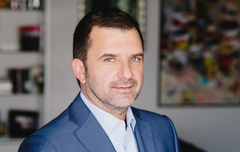
Spanish Transport Minister Óscar Puente has resigned, six days after two high-speed trains collided in a head-on collision that killed at least 69 people and injured dozens more. Puente announced his decision on Tuesday evening during a session in the Spanish Congress, where he gave an explanation for last week's accident near the town of Urda, south of Madrid. In the incident, one train crashed into another train that was stopped on the tracks.
"A Transport Minister in a country like Spain cannot continue to remain in office after two accidents of this importance in less than a year," he declared, also referring to the January accident on the same railway line, where 46 people lost their lives.
The latest accident is considered one of the worst rail disasters in modern European history and the worst in Spain since 2013. Before announcing his resignation, Puente had presented a series of new rail safety measures to Congress, while facing numerous questions and criticism from the opposition. He also announced that he would withdraw from the lists of candidates for the early parliamentary elections, the Telegraph reports.
The minister's position was called into question immediately after the October 28 accident. The conservative Popular Party and the far-right Vox party, as well as some government allies, had called for his resignation. Critics argued that Puente should take responsibility for the state of the high-speed rail system, whose safety has been called into question after recent accidents. Even Socialist Prime Minister Pedro Sánchez had acknowledged that the reliability of the system had been damaged.
The opposition had also criticized the minister for statements suggesting that human error could have been the cause of the accident, accusing him of trying to divert attention from his and the government's responsibilities. Puente's resignation comes at a crucial moment in Spanish politics, with snap parliamentary elections scheduled for November 29. Some observers see the accident as a serious blow to the Socialist-led government and as a factor that could influence the election result. Prime Minister Sánchez praised the minister's decision, saying he had faced the situation, given answers and proposed solutions before leaving office.
"For dignity. Of his own free will. Out of respect for the victims," Sánchez declared.
Meanwhile, questions about the cause of the accident remain at the center of attention. The collision involved a train from state-owned operator Renfe, with 397 passengers on board, and a train from the private company Iryo, which had 147 passengers and was stopped on the tracks. According to initial reports, a problem in the automatic signaling system, linked to a computer glitch, had forced the trains to stop on the relevant segment of the line.
After the accident, Spanish media released audio recordings of conversations between the drivers and the control center, recorded just minutes before the collision. They show communications between the operators of the Madrid center and the drivers of the two trains. One of the recordings appears to show that the driver of the Renfe train was given permission to continue the journey, even though the other train had stopped on the tracks, about 25 kilometers ahead of him.