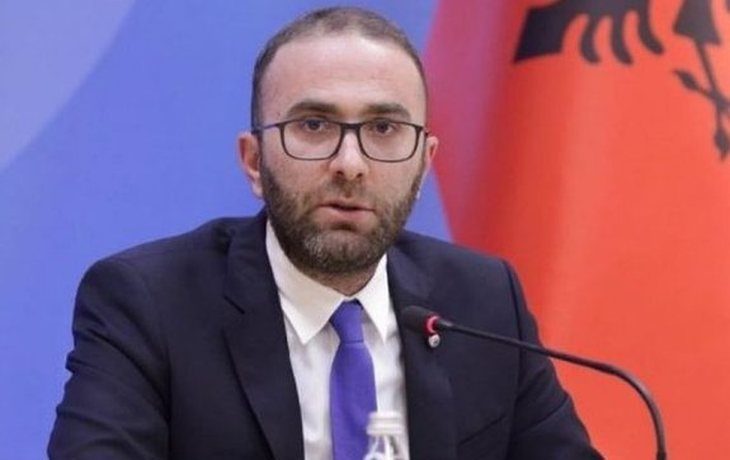
The Kosovo Assembly has voted in the new Government led by Albin Kurti of the Vetëvendosje Movement with 62 votes in favor, eight against and no abstentions, securing Kurti's fourth term as Prime Minister of Kosovo.
LVV has 53 MPs in the Assembly, but the new Government was also supported by nine MPs from non-majority communities - eight from non-Serb minorities and Nenad Rašić from the Serb minority.
The deputies of the Democratic Party of Kosovo, the Democratic League of Kosovo and the Alliance did not participate in the session. The deputies of the Serbian List participated and voted against.
The composition of the government cabinet remains the same as that of the third Government led by Kurti.
Composition of the "Kurti 4" government cabinet ( READ HERE )
During his speech, Kurti said that he will not present any new program or agenda, as he said that the repeated elections have interrupted the governance that will continue in the new mandate.
Kurti said that the vision of the Vetëvendosje Movement will be focused on the well-being of citizens and the protection of families.
"Today, this mandate is to strongly restore security and well-being to the daily lives of citizens," Kurti said.
He also promised various capital investments, such as establishing a publicly owned airline and creating a public transportation network throughout the country.
How was the Assembly constituted?
The Assembly was declared constituted earlier in the day, after the deputy speakers from the LDK and minority communities were elected.
The Democratic Party of Kosovo did not participate in the session and had previously withdrawn Vlora Çitaku's candidacy for vice president.
The chairwoman of the session, Albulena Haxhiu, said that the Parliament "cannot remain hostage to anyone, to any political entity."
The LDK candidate for vice president, Kujtim Shala, was elected with 75 votes.
After eight failed candidacies from the Serbian List, Serbian MP Tanja Vujović was also elected. She received the votes of the LVV and several LDK MPs.
From the non-Serb communities, Bosniak MP Emilija Rexhepi was elected.
After the voting of the vice-presidents, Haxhiu declared that the Assembly "is considered constituted."
In a previous decision, the Constitutional Court had left open the possibility that the Assembly, under certain circumstances, could function without one of the members of the Presidency, if his election is impossible and the Presidency has a quorum for decision-making.
One such circumstance was mentioned when a member of parliament or parliamentary group who has the right to propose a member of the presidency does not exercise this right or obstructs the process.
PDK opposes the process
The PDK rejects the interpretation that the Assembly was constituted without its deputy speaker.
The MP of this party, Përparim Gruda, said that the decision of the Constitutional Court that allows, under certain circumstances, the functioning of the Assembly without a member of the Presidency cannot be applied in this case.
According to Gruda, PDK has not given up its right to propose the vice president, but has only temporarily suspended the exercise of this right until the Constitutional Court clarifies the situation.
He said that "no one can benefit from their own violation," arguing that the LVV cannot violate the deadlines for the constitution of the Assembly and then use this situation to deny the PDK the right to propose the vice president.
The PDK has warned that it will appeal to the Constitutional Court.
On the other hand, Kurti said that whenever PDK is ready to propose its candidate for vice president, LVV deputies will vote for him.
What happens now?
LDK MP Ermal Sadiku has interpreted the latest process as part of a scenario leading to new elections. According to him, the 60 days for the election of the president, together with the 45 days for holding the elections, lead precisely to December 27th.
This date coincides with the end-of-year holiday period, when part of the Kosovo diaspora returns to the country.
The date is particularly important for the LVV, which in the June 2026 elections received a significantly higher percentage of votes from the diaspora than from resident voters.
The LVV received about 73 percent of the votes by mail and 83 percent of the votes in diplomatic missions, while it received about 43 percent of the votes from resident citizens.
Although 62 votes are enough for LVV to form the new Government, they are not enough to complete the process of electing a new president.
On August 31, LVV and LDK announced that they would support Bekim Sejdiu's joint candidacy for president.
But this candidacy has caused clashes within the LDK. Six of its 18 MPs have declared that they will not support it. /Taken from Radio Free Europe