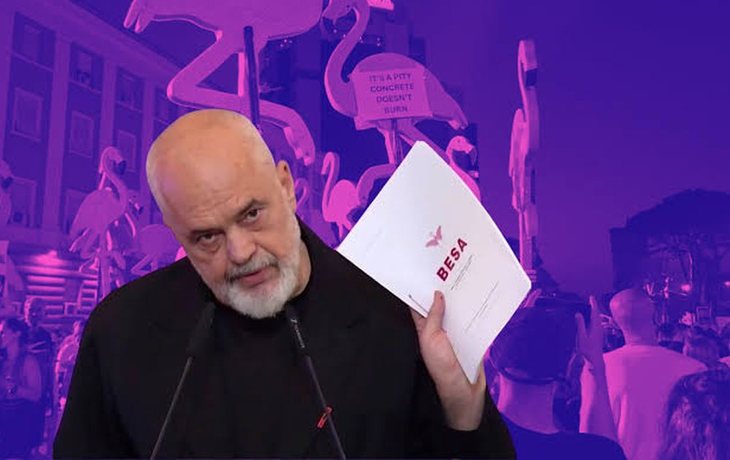
Tirana's main boulevard belongs to the "flamingos" every evening.
It is late afternoon, when dozens of citizens with banners, posters and flags begin to gather in "Skënderbej" Square. Among them, a new poster has become a ritual every night, with the number of the protest day. On Monday, the number will be 100.
At around 8:00 p.m., the first protesters begin their march toward the Prime Minister's Office, where a makeshift podium and microphone await the next speakers. Over the course of more than an hour, dozens more descend on the square. Some are there every evening, others join the protest sporadically.
For more than three months, Tirana has been living with the chants "Albania is not for sale", "Rama, resign" and "Rama in prison, Berisha in prison", the slogans of its early days.
But in 100 days, its repertoire has expanded. Every evening new calls arise, while rhymes and sarcasm towards Prime Minister Edi Rama, ministers and the majority are part of the protest ritual.
In the balance of these 100 days, activists and political analysts see its greatest achievement in bringing citizens back to the streets and exposing an authoritarian government.
Writer and activist Fatos Lubonja , a former political prisoner during the communist regime in Albania, defines the protest as an effort by Albanians against an authoritarian political regime.
“The protest has refuted the narrative that Albania has moved forward on the path towards the EU, as claimed by the Albanian political class, the EU itself and especially Rama, by proving that the country is under an authoritarian regime based economically on drug money laundering,” Lubonja told BIRN.
"It is an attempt by Albanians, driven to the extreme by the abuses of this regime in all aspects of their lives, to overthrow it," he stressed.
For architect and activist Andi Tepelena , one of the organizers of the protest, the real achievement is "breaking fear."
"We had been trying to revive civic nerve for a long time, since the collapse of the National Theater, but this protest showed that this nerve existed and Zvërnec just spilled the cup," says Tepelena.
“Gjëja më e bukur ishte që u derdh rinia në protestë, një rini e jashtëzakonshme që ka kuptuar që ky sistem ekonomik e politik nuk ecën më,” shtoi ai.
Qytetari si aktor politik
Zemërata nisi në një plazh pothuajse të virgjër në Zvërnec, një fshat i Vlorës, ku një gardh telash me gjemba ndalonte aksesin e publikut dhe fadromat e një kompanie private kishin shkatërruar dunat e rërës për t’i hapur rrugë një projekti masiv turistik që parashikohet të shtrihet në këtë zonë të mbrojtur natyrore, e njohur si Laguana Vjosë-Nartë.
Goditja dhe marrja zvarrë nga rojet e kompanisë private të një protestuesi paqësor nxiti një revoltë më të gjerë qyterare, që u zhvendos në bulevardin e kryeqytetit, duke u shndërruar në një protestë kundër korrupsionit qeverisës, shpopullimit, mungesës së meritokracisë dhe gjithë klasës politike të 35 viteve të fundit.
E organizuar nga aktivistë të shoqërisë civile, protesta arriti të ruante profilin e saj si organizim qytetar gjithpërfshirës pa dallime politike apo kulturore.
Për Adri Nurellarin, analist i politikës, kjo konsiderohet si arritja kryesore e saj.
“Protesta ka arritur diçka që dukej pothuajse e pamundur; ka thyer monopolin e partive mbi pakënaqësinë dhe ka rikthyer qytetarin si aktor politik,” tha Nurellari për BIRN, duke shtuar se që të ajo ka treguar gjithashtu se “frika nuk mposhtet duke pritur të largohet, por duke dalë bashkë në shesh”.
Nurellari konsideron disa rezultate të protestës, të tilla si vendosja në qendër e debatit të mbrojtjes së natyrës, pronës publike dhe vendimmarrjes pa qytetarët, tërheqja e vëmendjes ndërkombëtare, frymëzimi dhe aktivizimi i diasporës, deri tek ndikimi axhendës politike.
“Krijoi një gjuhë, simbolikë dhe identitet të dallueshëm,” thotë ai, duke shtuar se “flamingoja u kthye nga një shpend i kërcënuar në simbol të rezistencës qytetare, gjë që, për komunikimin politik shqiptar, është më shumë krijimtari sesa kanë prodhuar disa seli në tri dekada”.
Pavarësisht se qeveria nuk ka bërë asnjë hap konkret për të plotësuar kërkesat e protestës, për Nurellarin, ajo po reagon e ndikuar prej saj.
Duke krahasuar qëndrimet nga nisja deri tani të qeverisë, ai argumenton se “protesta e ka ndryshuar raportin politik, edhe pa marrë ende gjithçka që kërkon, pra pa marrë ende dorëheqjen”.
Edhe vetë qëndrueshmëria aq e gjatë konsiderohet një arritje politike. Në një vend, ku sipas Nurellarit entuziazmi publik shpesh zgjat sa një cikël lajmesh, protestuesit kanë treguar një stoicizëm qytetar të rrallë, mu në mes të vapës, lodhjeve, sulmeve, etiketimeve dhe presioneve. “Kjo është për t’iu hequr kapelen,” thekson ai.
For activist Tepelena, the protest's demands remain the same: resignation of the prime minister, repeal of clientelistic laws, and adoption of a new electoral system that would create the conditions for fairer political representation.
But he considers that the protest had several high points; from the support of international media that turned the "Flamingo Revolution" into a 'brand' and which is now one of the longest peaceful revolutions in the world, to the taking of MEPs to the streets.
“But above all, Albanians understood that they had to take their own destinies into their own hands without expecting help from any international power,” says Tepelena.
The future of protest
After nearly 100 days in the square, the "Flamingo Revolution" faces the test of autumn: how to maintain civic mobilization and turn it into political change.
"September will be a new moment of mobilization, especially for young people, and the aim is for the protest to escalate to civil disobedience, with the aim of the resignation of the prime minister and the transition to a caretaker government, " Tepelena predicts.
For Lubonja, however, the success of the protest does not only depend on her ability to stay in the square, if she intends to become a real actor of change.
"As an actor of change, to be successful, it needs the help of other actors of change, where I would single out the justice and attitudes of those we call our international partners, who to this day I see as passive," he said.
While for Adri Nurellari, the challenge of protest is the ability to move from civic reaction to building a civic movement.
“Protest is a reaction to what has happened; movement is a project for what should happen,” says Nurellari, adding that to become a movement, protest must offer hope for the future.
While people have taken to the streets for different reasons, this does not mean that they have automatically become part of a common organization, so the crucial question according to Nurellari is: "will this remain a protest, or will it turn into a movement?!" /Taken from Reporter.al