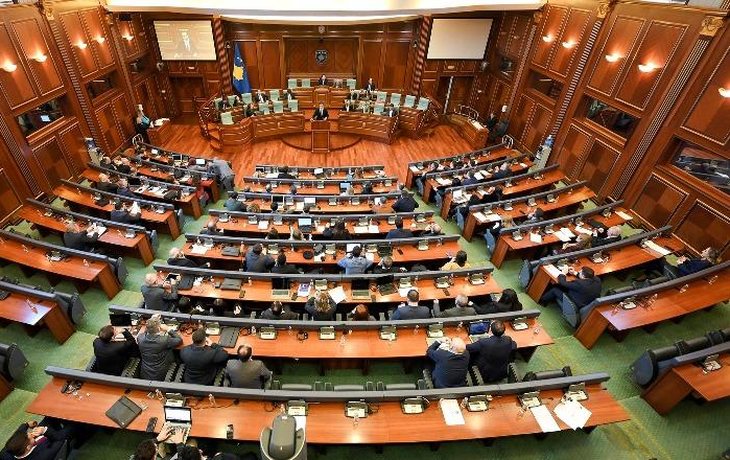
The new members of the Kosovo Assembly have only a few hours until the end, Friday at midnight, of the 30-day deadline set by the Constitutional Court for the conclusion of the constitutive session of the legislative body.
However, the chairman of the session, Avni Dehari, has decided that its continuation will be held on Saturday, August 8, at 11:00 am - that is, after the end of the constitutional deadline.
The constitutive session remained in limbo on Thursday, when Dehari postponed it indefinitely after a request from the leader of the Vetëvendosje Movement, Albin Kurti, for additional time for talks on a political agreement for the formation of new institutions.
The announcement to continue the session on Saturday came a few hours after Kurti and the leader of the Democratic League of Kosovo, Lumir Abdixhiku, held another meeting without reaching a political agreement.
Eugen Cakolli and Naim Jakaj, experts in legal matters, share the opinion that failure to respect the deadline constitutes a constitutional violation, but give different interpretations of the steps that should or could follow.
Cakolli: The hearing cannot continue after the deadline
Failure to constitute the Assembly within the constitutional deadline would put Kosovo in a situation of serious constitutional violation, assesses Eugen Cakolli from the Democratic Institute of Kosovo.
He argues that the August 7 deadline is absolute, and that it cannot be exceeded, despite the fact that the Constitution of Kosovo does not specify what the legal consequences of not respecting it are.
"More than the constitutional vacuum, the lack of this, let's say, sanction, I believe it is the fact that it was not assumed when the Constitution was written that we could reach the point where the Assembly does not even constitute itself," says Cakolli.
With the justification that additional time is needed for talks on the presidential issue, the leader of the Vetëvendosje Movement, Albin Kurti, on August 6 requested that the constitutive session be postponed, and did not name a speaker, thus interrupting the process of constituting the legislative body.
But, if the Assembly is not constituted by midnight, Cakolli estimates that there will be no constitutional basis for the chairman of the session, Avni Dehari, to call for its continuation.
"I believe it is clear that after midnight today, the deputies do not have the right to gather even on their own initiative, let alone be summoned by Mr. Dehari, in this case, as the chairman of the session, due to his age," says Cakolli.
For him, the consequences of the impasse are not limited to the Assembly.
He argues that, after being sworn in as MPs, ministers and deputy ministers currently in office cannot simultaneously continue to exercise executive functions.
Për këtë arsye, ai e konsideron Qeverinë në detyrë të Kosovës “pa legalitet dhe pa legjitimitet”, duke paralajmëruar se vendimet e saj mund të jenë objekt kontestimi në gjykata.
Sipas Cakollit, zgjidhja e parë juridike, në rast të moskonstituimit të Kuvendit brenda afatit kushtetues, do të ishte inicimi i një rasti në Gjykatën Kushtetuese. Megjithatë, ai beson se, në aspektin politik, epilogu është pothuajse i pashmangshëm.
"Zgjedhjet janë të pashmangshme, thjesht mbetet të gjendet rruga drejt tyre", thotë ai.
Ai shton se vendi tashmë ka humbur kohë me krizat institucionale, dhe se një proces i ri zgjedhor do të ishte skenari më i pafavorshëm, por nëse Kuvendi nuk arrin të konstituohet, ai nuk sheh një rrugë tjetër kushtetuese për dalje nga ngërçi.
Jakaj: Moskonstituimi e fut Kosovën në një situatë të paprovuar kushtetuese
Ndonëse pajtohet se mosrespektimi i afatit për konstituimin e Kuvendit përbën shkelje kushtetuese, Naim Jakaj nga Instituti i Kosovës për Drejtësi ka një interpretim tjetër për hapat që duhet të ndërmerren pas mesnatës së 7 gushtit.
Jakaj thotë se, meqë nuk është përcaktuar ndonjë sanksion konkret në rast se Kuvendi nuk konstituohet brenda këtij afati, vazhdimi i seancës konstituive edhe pas 7 gushtit është juridikisht i mundshëm.
“Normalisht, që edhe nëse kalon afati i sotëm, ai [kryesuesi Dehari] duhet ta thërrasë seancën konstitutive. Fatkeqësisht, nuk ka pasojë juridike. Sikur të kishte, do të vepronte në mënyrë të detyrueshme”.
Edhe mundësinë e dërgimit të çështjes në Gjykatën Kushtetuese, ai e sheh me rezervë.
Sipas Jakajt, një rast i ri nuk do të zgjidhte domosdoshmërisht krizën politike, pasi Kushtetuesja nuk ka çfarë të thotë tjetër përveç asaj që “deputetët e Kuvendit të Kosovës janë të obliguar që të veprojnë në interesin më të mirë të vendit dhe që [Kuvendi] është dashur të konstituohet brenda 30 ditëve”.
Megjithatë, edhe Jakaj paralajmëron pasoja serioze nëse bllokada vazhdon.
Ai e lidh ngërçin aktual me afatin për zgjedhjen e presidentit, duke kujtuar se ushtrimi i detyrës së presidentit nuk mund të zgjasë më tepër se 6 muaj, përkatësisht deri në fillim të tetorit.
Kryetarja e legjislaturës së 10-të, Albulena Haxhiu, e betuar më 6 gusht si deputete e legjislaturës së 11-të, është ushtruese e detyrës së Presidentes që nga prilli 2026, kur Vjosa Osmanit i përfundoi mandati pesëvjeçar në krye të shtetit të Kosovës.
"Ne do të hyjmë në një situatë të cilën nuk e kemi shkelur asnjëherë... kjo do të prodhojë pasoja të cilat ne nuk i kemi parë më herët, dhe të cilat në rendin demokratik lirisht mund të quhen rrënim i demokracisë", thotë Jakaj.
Sipas tij, nëse deri në përfundimin e mandatit të ushtruesit të detyrës së presidentit nuk zgjidhen institucionet e reja, Kosova mund të mbetet pa autoritetin që do të mund të shpallte zgjedhjet ose t'ia besonte mandatin për formimin e Qeverisë kandidatit për kryeministër.
For this reason, he believes that political parties should reach an agreement as soon as possible that would pave the way for the constitution of the Assembly, the formation of the Government and the election of the president, so that the country can avoid, as he calls it, an "institutional anarchy".
In addition to Cakolli and Jakaj, other members of civil society in Kosovo have called for the constitution of the Assembly to be completed within the constitutional deadline.
The Group for Legal and Political Studies (GLPS), in a public reaction, said "that party interests have exceeded the public interest by blocking the functioning of institutions and damaging the trust of citizens."
"Today there is no longer any room for justifications, broad political interpretations or further postponements. There is only one clear obligation, the constitution of the Assembly within the constitutional deadline. Any failure to fulfill this obligation would be a violation of the constitution and an irresponsible political and institutional act," GLPS said in its reaction. /Taken from Radio Free Europe