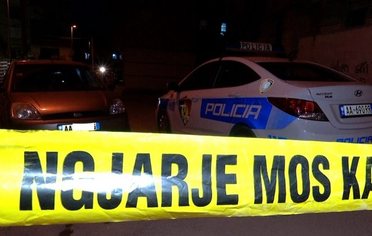
Spanish media have paid attention to the arrest by Albanian police in the city of Gjirokastra of Klodian Bena. There was an international arrest warrant for the 43-year-old issued in June 2025 by a court in Sabadell (Barcelona).
He is accused of the criminal offenses of cultivating and trafficking narcotics - within the framework of the phenomenon of the so-called "weed houses" or "marijuana houses" - as well as theft of electricity.
Bena's arrest was carried out this Tuesday morning, in an intervention by the Gjirokastra police forces, as part of the national police operation called "Fugitive", focused on finding and arresting persons wanted by foreign courts.
After his detention and arrest, the Interpol Tirana section activated the cooperation protocol with Interpol Madrid, to proceed with his immediate extradition to Spain.
"Although Albanian authorities have not officially specified whether the arrest of Klodian Bena is linked to a specific large-scale network, his arrest occurs in a situation where the police have observed an increase in organized crime originating from the Balkans in Spanish territory.
According to reports prepared by Europol, various criminal organizations of Albanian origin have significantly strengthened their presence in the Spanish cannabis market in recent years.
"These groups operate both in the direct production phase within Spain, controlling industrial warehouses and villas transformed into hydroponic cultivation environments, as well as in the importation and redistribution of drugs to other countries of the European Union," writes the Spanish newspaper "El Mundo ".
The newspaper recalls that the most important operation against this type of network took place in July 2021. It was a major operation coordinated between the Spanish National Police, the German police and the Albanian authorities and ended with the arrest of 107 people.
The network operated as a structured clan, which managed industrial-scale marijuana plantations scattered throughout the eastern coast of Spain.
In that case, Europol estimated that electricity fraud, created through illegal connections and tampering with energy meters, had caused more than 1.6 million euros in direct losses for energy distribution companies. ©LAPSI.al