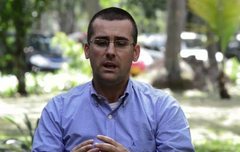
On August 6, 2026, at Fort Lauderdale-Hollywood International Airport in Florida, Matias Pourrain was preparing to board a plane with teammates from Miami United, a semi-professional club in the United Premier Soccer League, bound for Los Angeles for a game when two plainclothes ICE agents stopped him. He had presented his work permit, but he was still required to undergo a series of digital checks that would take ten minutes. Instead, it was the beginning of a nightmare that lasted 22 days in prison, in extreme conditions and deprived of the most basic human rights.
For no apparent reason, Matias Pourrain found himself handcuffed and foot-bound, put in a van and taken to a detention center in Miramar. Even today, he claims to have never fully understood the real reason for his arrest, although the Department of Homeland Security officially accused him of overstaying beyond the six months allowed by the visa he obtained in November 2019, which expired in May 2020. Pourrain, however, was in possession of regular work documentation and had a residency procedure in progress, all elements that, according to his lawyer Regina Borges de Moraes, should not have justified the arrest. Beyond inhumane treatment, unimaginable for any prisoner.
Pourrain's story, hellish conditions and an unforgettable hunger
Pourrain's account, recently given to The Athletic, has become a list of shocking humiliations. In the overcrowded Miramar cell, where up to 70 men are held, hunger is the first torture: three days without food. "When he came, it was moldy, with black circles on the bread." The drinking fountain was next to the toilets: "The water flowed where people had just urinated. Everything was inhumane," he said, "hunger was the worst."
ICE, contacted by the American newspaper, has firmly denied these claims, stating for its part that “all detainees receive three meals a day, drinking water, clothing, sheets, access to showers, soap, and the opportunity to communicate with family and lawyers.” However, it is difficult to completely dismiss as imagination such a detailed and coherent account, especially when other, equally shocking details are added.
? "I FELT SEIZED, THEY ASKED FOR 20 MILLION DOLLARS AND THEY LIBERATED ME"
— Rivadavia Radio (@Rivadavia630) September 4, 2026
Matías Pourrain, Argentine soccer player who was arrested by ICE, told #VamosRivadavia with Nelson Castro cómo fueron sus días en la prison de Estados Unidos. pic.twitter.com/Tz6oDZa0QK
Transfers without consent: no one knew where Pourrain was
After a brief stay at another facility in Belle Glade, Pourrain's most terrifying moment comes when he gets back into a vehicle and then into a plane, not knowing his destination, fearing he's being taken to the Mexican border. After 24 hours of panic, he finds himself in the Rio Grande Detention Center in Laredo, Texas, but without any of his relatives knowing where he is: he doesn't even show up in the ICE tracking system. It wasn't until August 28, after the family managed to post a $20,000 bond, that Pourrain confirmed that he had been able to regain his freedom.
A story that is not only the personal story of a semi-professional footballer, but that takes place in an America where immigration controls, which during the last World Cup had already caused controversy and denunciations of excesses, not only by ICE, have become stricter after the Trump administration made control operations stricter and more intense.
Today, Pourrain continues to live in the United States and wants to get a green card, despite the “mental torture and sheer terror” he has experienced. Another form of resistance and a silent cry against the distortion of a system capable of turning even someone with regular documents and work into a simple number to manage. In the worst way.