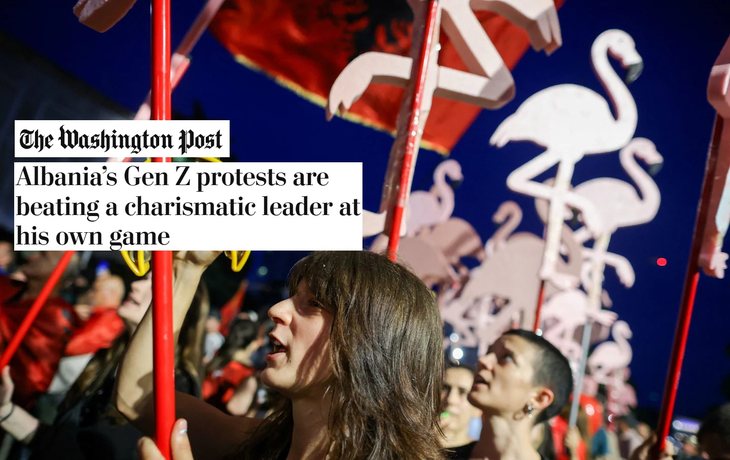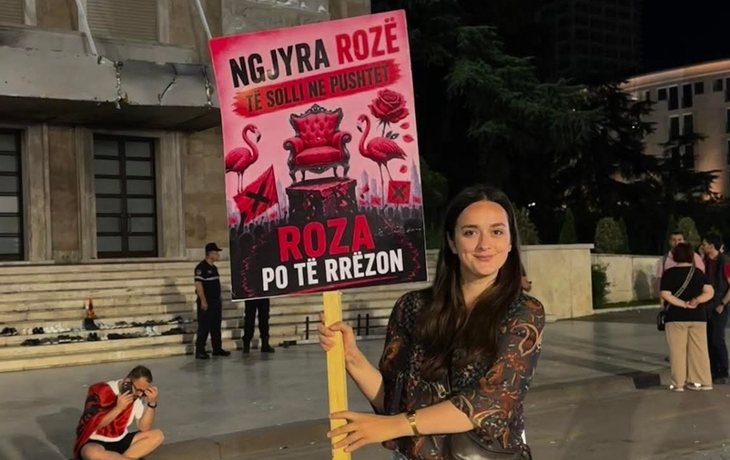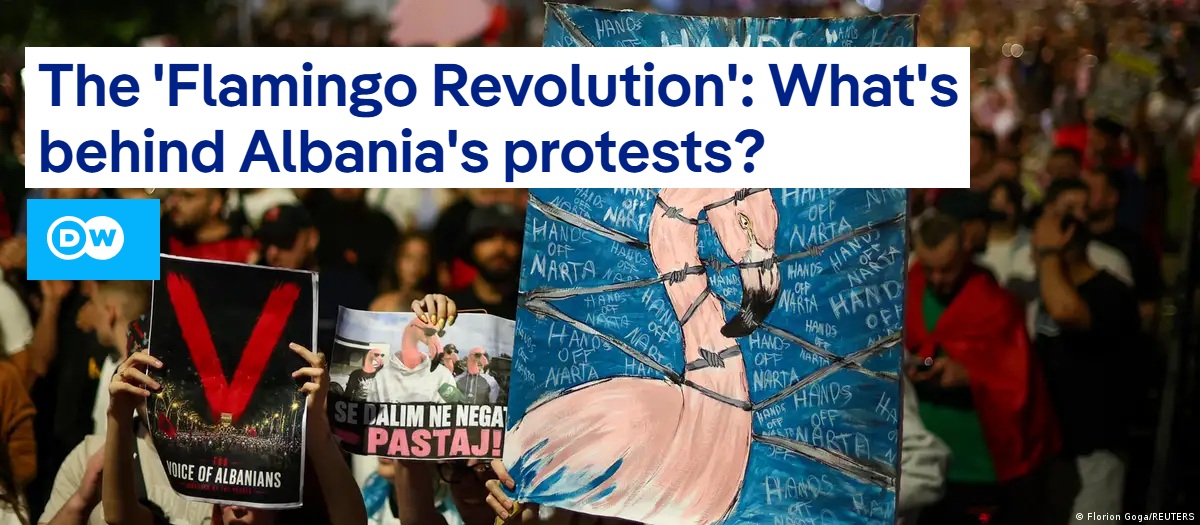
Every evening at 7 p.m., protesters return to the same square in Albania's capital, Tirana, with the same symbols, making the same demands.
More than three weeks of daily, non-stop demonstrations have transformed the "Flamingo Revolution" into the largest civic protest movement in Albania since the fall of communism.
It began when a government-approved luxury tourism project in Zvërnec, a protected coastal area in southern Albania, sparked protests that quickly evolved into a broader political movement.
Initially sparked by environmental concerns, the demonstrations have expanded into broader demands, including calls for the resignation of Prime Minister Edi Rama.
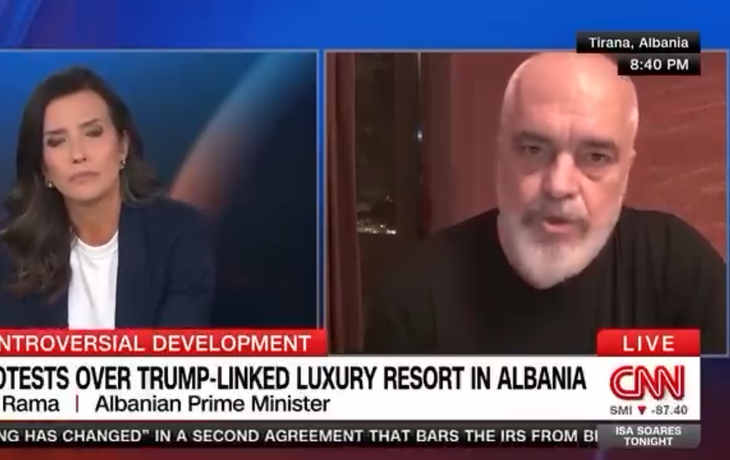
Rama rejects the idea that the unrest can be explained solely by domestic political discontent. Instead, he argues that the protests are taking place within what he describes as a “hybrid war” fueled by external influences and digital manipulation.
Kushner's luxury resort
For Rama, the controversy gained international attention only after he was linked to Jared Kushner, the son-in-law of US President Donald Trump, who is planning to build a luxury tourist project in Zvërnec.
"The world did not wake up because of Narta's fate, but because of Jared Kushner's name," Rama said at a meeting of the Socialist Party parliamentary group on June 20.
The prime minister argues that what he called a "digital cyclone" has allowed the protests to be amplified by a wide range of external actors, including opponents of Donald Trump, anti-Israel groups and what he calls state-sponsored "digital mercenaries."
"State-sponsored actors have been identified, including those from Iran," he said.
Echoes of Albania's communist past
Jonila Godole, a researcher of political communication and collective memory at the University of Tirana, argues that Rama's interpretation of the protests reflects a familiar communication strategy: shifting the focus from the protesters' demands to the alleged forces behind them.
"When a civic protest is portrayed as Iranian, anti-Israel or instigated by Trump opponents, the focus shifts from what the protesters are demanding. The debate shifts instead to the alleged perpetrators of the protest - the external enemy," she told DW.
Godole sheh gjithashtu jehona të së kaluarës komuniste të Shqipërisë në retorikën e Ramës. Gjatë periudhës komuniste të Shqipërisë, mospajtimi politik portretizohej rregullisht si vepër e forcave të huaja armiqësore.
Ajo argumenton se gjuha e armiqve të jashtëm vazhdon të rishfaqet sa herë që ata në pushtet përballen me presion të vazhdueshëm të brendshëm.
"Frika ishte kapitali politik i regjimit komunist", thotë ajo. "Ajo e mbante shoqërinë nën kontroll dhe e përqendronte pushtetin rreth udhëheqësit. Sot, kjo gjuhë nuk funksionon më në të njëjtën mënyrë. Të rinjtë nuk e njohin më atë kod politik. Ata e refuzojnë atë."
A mund ta shpjegojnë algoritmet një protestë?
Teoricieni akademik dhe i komunikimit Artan Fuga argumenton se t’ia atribuosh protestat algoritmeve rrezikon të ngatërrosh mediumin me kauzën.
Platformat dixhitale mund të përshpejtojnë qarkullimin e informacionit, thotë ai, por ato nuk mund të shpjegojnë pse qytetarët zgjedhin të dalin në rrugë.
"Algoritmi është pjesë e mjedisit të komunikimit. Mund të përshpejtojë qarkullimin e mesazheve, të amplifikojë emocionet dhe të rrisë dukshmërinë. Por nuk është shkaku i pakënaqësisë sociale", thotë ai për DW.
"Teknologjia mund të ndikojë në mënyrën se si përhapet një protestë, por nuk krijon arsyet për protestën. Ngatërrimi i algoritmeve me pakënaqësinë sociale do të thotë të ngatërrohet kanali me burimin."
Tensioni është krijuar prej vitesh
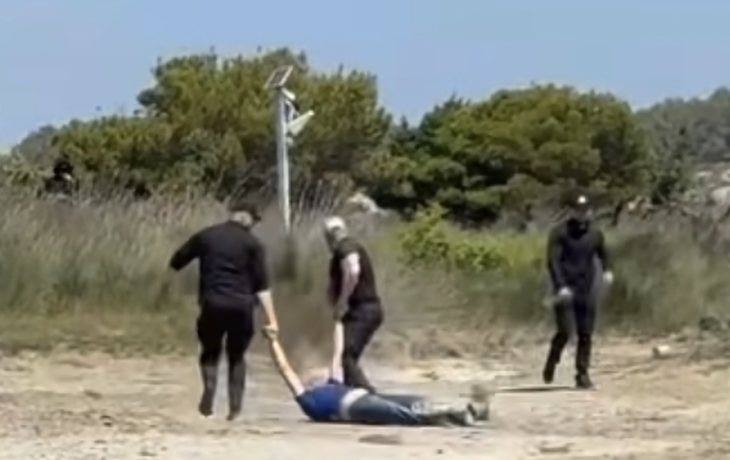
Për shumë analistë, pika e kthesës nuk ndodhi në internet, por në plazhin e Zvërnecit më 30 maj.
Përpara kamerave të telefonave celularë dhe në prani të oficerëve të policisë, një protestues u zvarrit nëpër rërë nga roje private sigurie. Pamjet u përhapën me shpejtësi në mediat sociale, duke e transformuar atë që kishte filluar si një protestë mjedisore në një debat më të gjerë kombëtar rreth pushtetit, llogaridhënies dhe sundimit të ligjit.
Artan Fuga argumenton se imazhet bënë jehonë sepse kapën tensionet që ishin krijuar në shoqërinë shqiptare prej vitesh.
“Ishte një moment tronditës për publikun shqiptar", tha ai. "Ajo skenë nxori në pah marrëdhënien midis qytetarëve dhe shtetit, midis individit dhe të drejtave të tij, si dhe përplasjen midis interesave private dhe të mirës publike."
Më shumë sesa thjesht një protestë mjedisore
Analisti politik Blendi Kajsiu argumenton se protestat zbulojnë një krizë shumë më të thellë sesa një mosmarrëveshje për mbrojtjen e mjedisit.
Sipas tij, ajo që i bashkon demonstruesit nuk është një ideologji e përbashkët, por një refuzim i përbashkët i modelit politik të Shqipërisë.
“Po dëshmojmë një krizë të thellë të modelit demokratik të Shqipërisë. Ajo që i bashkon këta protestues nuk është më ideologjia, por bindja se sistemi politik i vendit nuk i përfaqëson më ata”, tha ai për DW.
Kajsiu argumenton se protestuesit po përpiqen të rimarrin hapësirën publike nga ajo që e shohin si kapjen graduale të saj nga interesa të ngushta politike dhe private.
"The fence erected in Zvërnec became a physical manifestation of what many citizens believe has happened to the prime minister's office, parliament, and political parties: They have been surrounded by their 'owners'."
Beyond Albania
The debate has already reached the EU.
In its latest progress resolution on Albania, the European Parliament expressed “serious concern” over developments in the Vjosa-Narte protected area, and called for an immediate moratorium on new permits and construction in protected areas.
The resolution argues that environmental protection and the rule of law remain part of Albania's commitments for EU membership.
Jonila Godole believes that the European Parliament resolution shows that European institutions have acknowledged the environmental and rule of law dimensions of the dispute.
However, she argues that portraying the protests using the language of hybrid threats and foreign interference risks shifting international attention away from the protesters' democratic demands and towards issues of security and stability.
"For years, Europe has been calling for a stronger civil society to strengthen democracy," she said. "Today, Albania has a strong civil society that has mobilized to an unprecedented extent, yet there has been little international reaction in support of this mobilization. The question is whether civil society is only welcome when it is weak, and not when it becomes a real political actor."
©Reporting by DW Albania journalist Rashela Shehu, edited by Aingeal Flanagan.
/Adapted to Albanian LAPSI.al