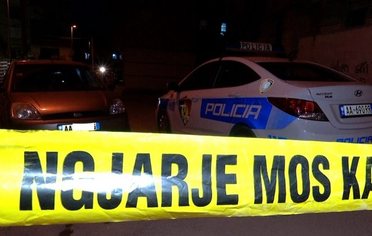
Hundreds of students and citizens protested for about nine hours on October 13 in Tirana, demanding the resignation of Prime Minister Edi Rama's government, which they accuse of corruption, misgovernance, and a lack of prospects for young people.
The protest, which began in front of the Ministry of Education with demands for better study conditions, more affordable fees, and employment opportunities, escalated into clashes with the police and damage to public and private property.
Protesters threw stones and fireworks at institutions and police, while law enforcement used tear gas and water to disperse them. A group of protesters also entered the premises of the Tirana Municipality, where windows were broken and material damage was caused. Garbage bins were burned on the streets of the capital and several businesses were damaged.
According to health authorities, 27 people received medical treatment after the protest, including protesters, police, journalists, bystanders and a foreign diplomat. Seven of them were still receiving treatment at the Trauma Hospital on the morning of October 14 and were out of danger. Over 50 people were escorted to the police station.
A demonstrator is treated after being hit by tear gas on October 13.
Meanwhile, protesters' allegations of excessive use of force by police have prompted investigations.
After the publication of footage showing a 19-year-old man with an injured leg being escorted by police officers, the State Police suspended four officers and the chief of police at one of the Tirana police stations.
The young man suffered a fractured leg, but the circumstances of the injury remain unclear. Authorities have launched an investigation, while the Police have warned of responsibility for any excess of authority. The Ombudsman has also launched an investigation into the proportionality of the use of force.
What do the protesters demand?
The dissatisfaction that brought students to the streets is related to the conditions at universities, the cost of studies, the lack of financial support, and the difficulties in finding a job after graduation.
But the October 13 protest also had a political demand: the removal of the Rama Government.
Arvina Lleshi, an activist and one of the organizers of the protest, told Radio Free Europe that the protesters no longer intend to negotiate with the government to fulfill specific demands.
"We have no requests to address to the Ministry of Education or the Government and discuss their fulfillment. There is only one request: The departure of the Rama Government. Without resignation, we will not stop," said Lleshi.
She linked the student protest to the rallies of the "Flamingo Revolution" movement, which have been taking place in Tirana for more than four months against the government. According to her, the lack of response from the authorities has pushed the organizers to escalate the protests.
The "Flamingo Revolution" movement began as opposition to a luxury tourism project in the Zvërnec protected area, due to concerns about the environmental impact, but gradually transformed into a broader mobilization against corruption, economic inequality, and governance.
According to the platform published by the movement, the protesters demand the resignation of the government, the formation of a transitional technical government, and the organization of free and fair elections. They also demand the cancellation of the tourist project in Zvërnec and the repeal of the legal amendments on protected areas and the law on strategic investments, which they consider abusive.
Its activists have criticized both Prime Minister Rama and opposition figures, demanding political and legal accountability. Opposition representatives also participated in the October 13 protest.
The Albanian government did not respond to Radio Free Europe's request for comment regarding the protest and calls for its resignation by the time of publication of this article.
However, Deputy Prime Minister Albana Koçiu condemned through social media the violence against institutions, attacks on the police, and damage to public property.
She stressed that violence is not a way to express dissatisfaction, but did not directly respond to the protesters' political demand for the government's removal.
What's next?
After the October 13 protest, students have called for a boycott of classes on October 14 and continued rallies, aiming to include students from other cities in Albania.
Organizers have referred to the student protests of 2018, arguing that the demands of that time have not been fully met.
In December 2018, thousands of students protested against high university fees, the costs of postponed exams, and poor living conditions in dormitories, presenting eight demands for higher education reform.
The government took several measures, including reducing fees, but dissatisfaction regarding university funding, the quality of education, and student representation continued.
Eight years later, the new protest has gone beyond educational demands, putting the government's political responsibility at the center. /Taken from Radio Free Europe