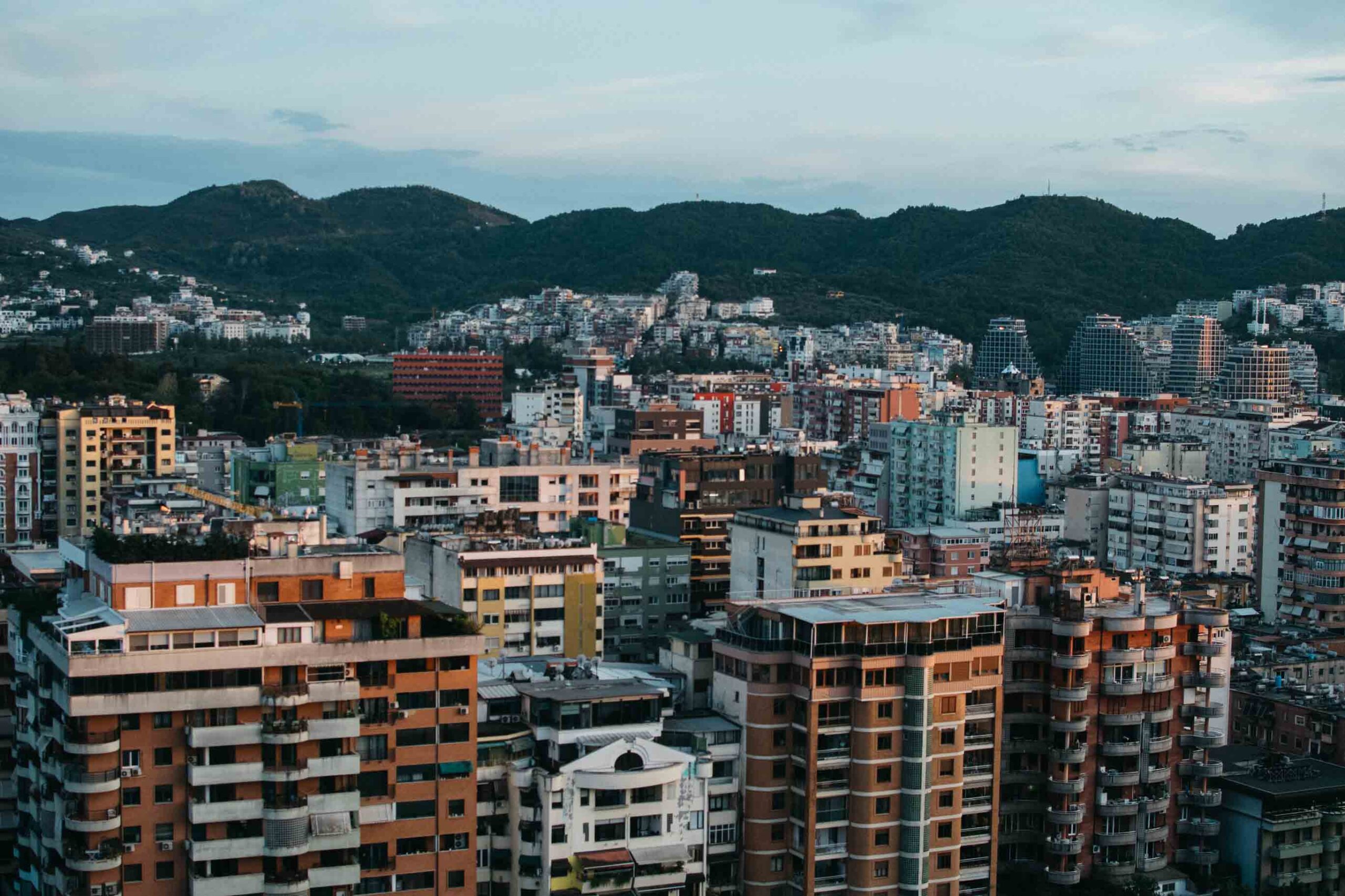
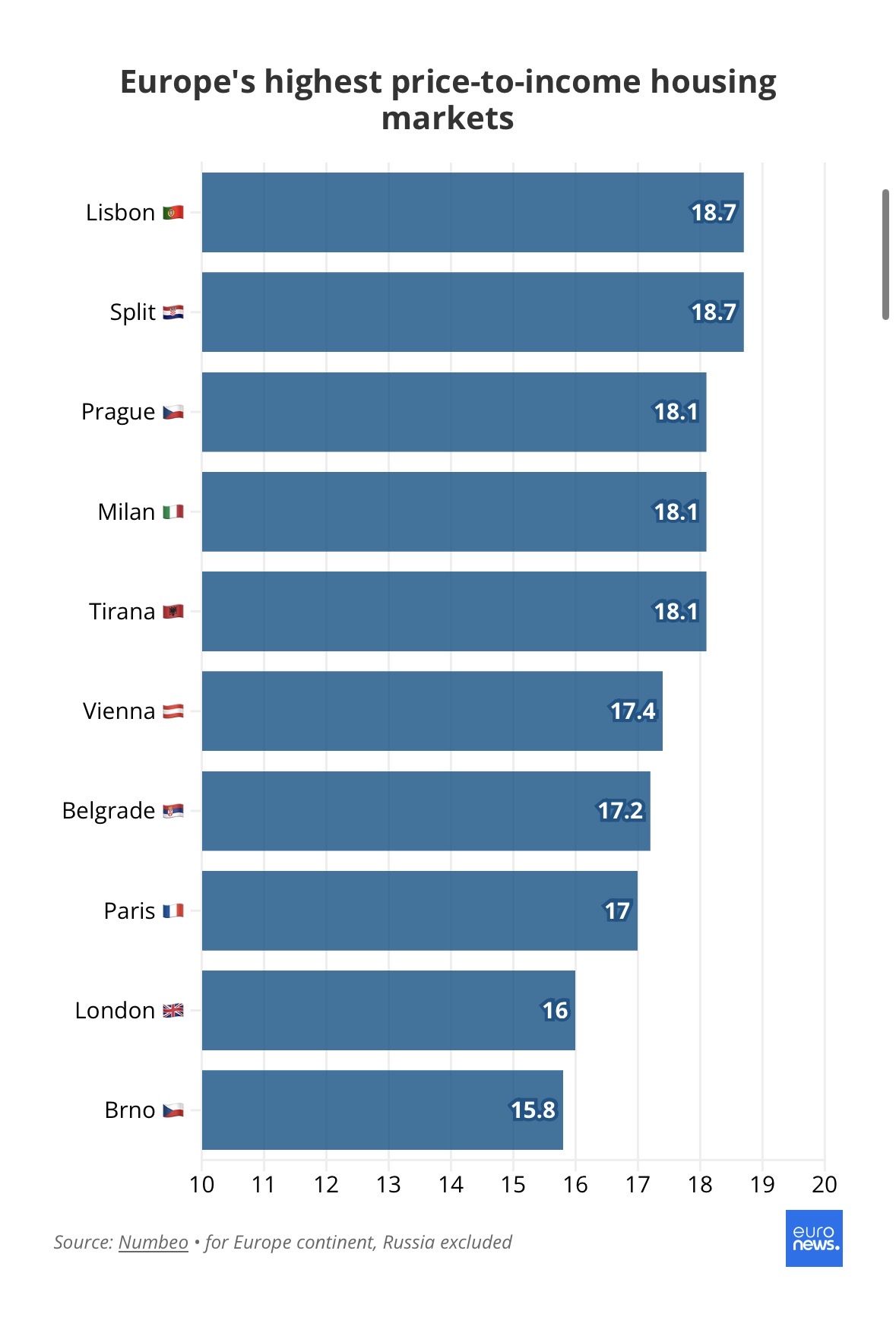
The real estate market in Tirana continues to rank among the most unaffordable in Europe. According to the latest data from the international platform Numbeo, an Albanian family needs an average of 18.1 years of income to buy a home, placing Tirana in fifth place in Europe for the highest ratio between housing prices and income.
This means that buying a house in the Albanian capital is more difficult than in cities like Vienna, where it takes about 17.4 years of income, Paris with 17 years, or London with 16 years.
The ranking is led by Lisbon and the Croatian city of Split, where the ratio reaches 18.7 years, followed by Prague, Milan and Tirana. Belgrade, Paris, London and Brno also rank in the top ten most expensive cities to own a home.
The price-to-income ratio is considered one of the most important indicators for measuring the affordability of the housing market. It shows how many years of income an average family needs to buy a typical home. According to ABN AMRO economist Mike Langen, any ratio above 10 is considered problematic for buyers, as it exceeds the usual limits of bank lending and the solvency of families.
Tirana's position in this ranking shows that housing prices have been significantly decoupled from the pace of income growth of Albanian families. Although wages have increased in recent years, the pace of apartment price growth, especially in the capital, has been significantly higher, making ownership increasingly unaffordable for a large portion of citizens.
An even more extreme situation occurs in Portugal. In Lisbon, an apartment costs an average of 18.7 times a family's annual income. Over the past decade, house prices in Portugal have increased by nearly 240%, while wages have only increased by 59%, creating a huge gap between property values and citizens' purchasing power.
According to the OECD, Portugal is among the countries with the most limited access to housing in the developed world. The organization highlights the lack of housing supply, the weak rental market and regulatory obstacles as the main factors of the housing crisis. Currently, around 25–30 thousand homes are built per year, while the real market needs are estimated at 45–50 thousand homes.
However, other analyses suggest that a lack of supply is not the only cause. In its latest housing market monitoring report, ABN AMRO argues that rising incomes and lower interest rates have historically had a greater impact on house price growth in Europe than the pace of new home construction.
Despite record costs, economists do not expect an immediate drop in prices. In Portugal, the central bank estimates that high demand, limited supply and strict lending rules keep the market relatively stable, although affordability indicators continue to give worrying signals.
Even for Tirana, the ranking among the most unaffordable cities in Europe shows that the main challenge is not only the increase in prices, but the fact that they are moving much faster than family incomes. As a result, the dream of buying a home is becoming increasingly distant for a significant part of Albanian citizens. /Taken from ekofin.al