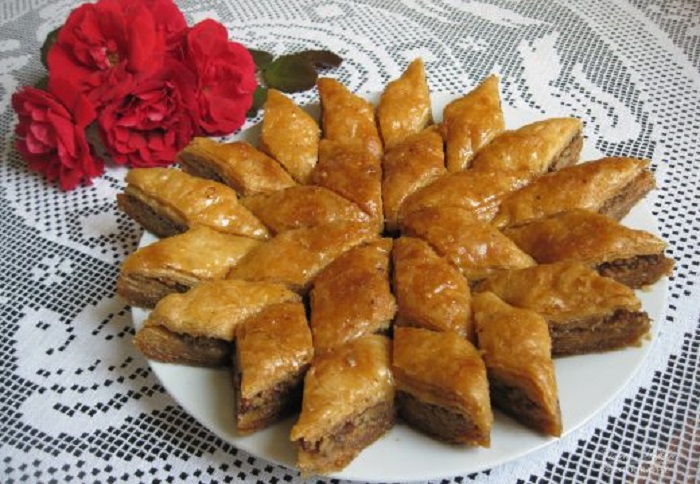
German media have revealed details of a new dispute between Turkey and Greece. This time, the cause is not maritime space, but... the origin of baklava. Ankara has submitted a request to UNESCO to recognize baklava as part of its national cultural heritage.
The decision is expected to be made later this year, during the 21st session of the Intergovernmental Committee for the Safeguarding of the Intangible Cultural Heritage to be held in Xiamen, China.
In 2013, Turkey managed to secure protected geographical indication status for Gaziantep baklava.
Food historians place the discussion in the context of a centuries-old culinary exchange that combined Byzantine, Oriental and Arab traditions, before the dessert took on its current form during the Ottoman period.
According to the Arabic newspaper Alghad, the regions from which early variations of baklava originated were closely linked politically and culturally. Recipes were spread through traders, chefs, and armies long before modern borders were drawn.
Studies show the existence of ancient pastries that contained nuts and honey, but these do not correspond to the thin layers of buttery pastry we have today.
The modern preparation technique probably began in the 15th and 16th centuries in the palace kitchens of Constantinople and spread from there throughout the Ottoman Empire - from the Balkans to the Eastern Mediterranean.
Even the linguistic origin of the name is still a matter of debate.
Ankara focuses on the first recipes in the style of modern Ottoman cuisine, while Greek historians cite Byzantine and Greek "ancestors" of baklava. ©LAPSI.al