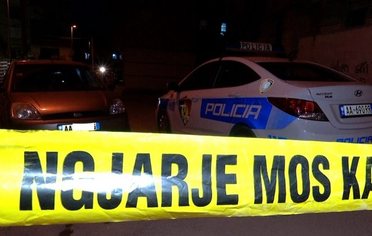
Students from several universities in Tirana have boycotted the teaching process today, October 14, joining the protests that began the day before in the capital. Students from the Faculties of Medicine, Economics, Law and the Polytechnic University have joined the boycott, while the reaction has also extended to high school students.
The protests, which center on dissatisfaction with the government and educational conditions, come at a time when young people are facing increasingly high living costs and difficulties in securing stable employment after graduation.
Although the Albanian economy has continued to grow in recent years, affordability and economic opportunities for young people remain problematic. Rent prices in Tirana have risen to levels that exceed the means of an average wage earner, while food now costs more than the European Union average. These conditions have significantly hampered students' opportunities to pursue their education.
Rents in Tirana reach 97% of net salary, unaffordable for young people
One of the biggest problems for young people studying or starting their professional lives in Tirana is the cost of housing. According to data from real estate agencies, processed by Monitor, the average rent for apartments in the capital reached 721 euros per month in June 2026.
This amount represents about 97% of the average net salary, calculated on the average gross salary of the first quarter.
According to international affordability standards, housing costs should not exceed 30% of income. In Tirana, an individual with an average salary would have to spend almost all of their monthly income just to pay rent, not including food, transportation, and other expenses.
This situation is also affecting the choices of young families, who are looking for alternatives outside the capital. According to real estate market experts, cities like Elbasan, where rents are around 30-40% lower, are becoming alternatives for individuals and families who work in Tirana but cannot afford the housing costs.
Food more expensive than the European average, incomes much lower
In addition to housing, the budgets of young Albanian families and young people in particular are also being burdened by rising food prices. According to Eurostat data, processed by Monitor, the food price index in Albania reached 102.9% of the European Union average in 2025, exceeding this level for the first time.
This means that a food basket that costs an average of 100 euros in EU countries costs around 103 euros in Albania, measured according to purchasing power standards.
The gap is even greater when comparing incomes. While food prices are about 3% above the European average, per capita income in Albania is only 43% of the EU average.
The pressure on consumers continued throughout 2026. In July, food and non-alcoholic beverages rose by 3.2% year-on-year in Albania, while in the European Union the increase was only 0.6%. So, food prices in Albania rose more than five times faster than the European average.
This makes it increasingly difficult for young people, especially students living away from their families, to cope with daily expenses.
A university degree is not guaranteeing employment
Economic hardship does not end with graduation. Labor market data shows that a significant portion of young people with higher education fail to find work, despite businesses' needs for employees. According to INSTAT, in 2025 there were 17,800 unemployed people with higher education, of whom 9,693, or about 55%, were under the age of 30.
These figures highlight the difficulties of the transition from university to the labor market. One of the main problems is the mismatch between university programs and the demands of the economy, which is creating jobs mainly in services, tourism, construction, and trade. For many young people, a diploma is no longer a guarantee of employment in a profession or of securing sufficient income for an independent life.
Another worrying indicator is the share of young people who are neither in employment, education or vocational training, known as the NEET category. According to data for 2023, this category accounted for 24.6% of young people aged 15-29 nationally, while in Tirana it reached 27%.
While the cost of living in Tirana has increased rapidly in recent years, with higher prices and more expensive food, on the other hand, conditions in the labor market for young people have worsened in recent years at a time when the overall economy is growing./Monitor