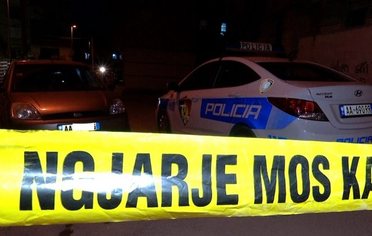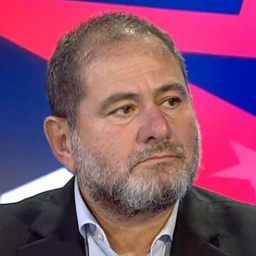
Sali Berisha, who heroically survived one of the most severe blows in his political history, nevertheless failed to position his party in sync with the aspirations of Albanian citizens. Today, when thousands of young people clash and bleed in the streets of Tirana with the regime's police, the distance between the main opposition force and the citizen revolt seems even greater.
The last four or five months have proven the inability and helplessness of the Democratic Party to orient itself in a new political situation, that of the regime's direct confrontation with the citizens oppressed until yesterday. Complicated initially by the name of Trump's son-in-law and then by the calls of tens of thousands of people "Rama in prison, Berisha in prison", the historical leader of the DP, and consequently those after him, did not manage at any single moment to find their place in the new Albania that is being projected.
The DP, which did not know or was not able to read the signs of the regime's collapse, was caught off guard in order to have a clear political decision-making. On the one hand, it supports the protest and on the other hand, it prepares for local elections when the number one point of the popular revolt is "there is no election with Rama as prime minister". It normally participates in parliamentary committees and calls for radical actions in plenary sessions, which then end up only with Gazmend Bardhi, Flamur Noka, Bledion Nallbati, Klevis Balliu and some other individual. It condemns and denounces violence and abuses but does not say what path it will follow: will it also go out into the streets or will it continue to enter the Assembly through the back doors of the building.
Of course, the incandescent situations, like those of recent months, never escaped the capitalization of a veteran like Sali Berisha. However, the Democratic Party has remained closed in conference rooms, in renewal and inspiration, while the created situation requires absolutely something else. Perhaps age and the wounds of the long battle of return, have dulled Berisha's instinct of the "predator" that once ignited even when he saw 100 people gathered together. Perhaps the inability to restore full authority over a party where a large part considers their mission accomplished with the support they gave for the return, makes it impossible for him to make a decision that would then be left to the streets. But why not a kind of hesitation about any uncontrolled explosion, which is very likely to produce a citizen rebellion, and which would remove him from the future political scene, is a reason that explains Sali Berisha's behavior around himself for four months.
The contrast between the clash between the students and the regime's police and the halls of the "renewal" of the Democratic Party, in fact, shows that the exit from the stage has already begun. What is happening these days in Serbia could happen in Albania, where the traditional opposition has almost no political weight and the Student List is leading the electoral polls against Vučić's party. Usually, the collapse of such long-standing regimes is followed by a shake-up of the entire political system. The DP must understand that they cannot continue with the same 15-year strategy, while history can change in 15 days.
Without a doubt, the return of Sali Berisha, his epic battle to keep the real opposition alive, are the greatest contribution that preserved the fiber of resistance in Albania, without which we would not have today's confrontation with the regime. But if Sali Berisha believes that there is still time to reposition his party, the first decision would be that there can be neither local nor international elections without Edi Rama resigning. That the opposition's only action and strategy is synchronization with the citizen protest. The points that the protesters have been demanding, since Rama's departure, the preparation of early elections by a caretaker government, the change of the electoral code, etc., should be returned to the DP program. How true the DP would be on this path would depend on its ability to gain the trust of the citizens, but, even if we foresee failure, this is the only path left.
Territorial reform or mayoral candidates are not on Albania's agenda today. Sali Berisha cannot talk about a narco-dictatorship and act as in a functional democracy. Faced with state violence, heads smashed on the asphalt, broken legs and punches in the face, the solution is not the renewal of a party but the explosion of a society. The DP must decide where and with whom it will be. ©lapsi.al