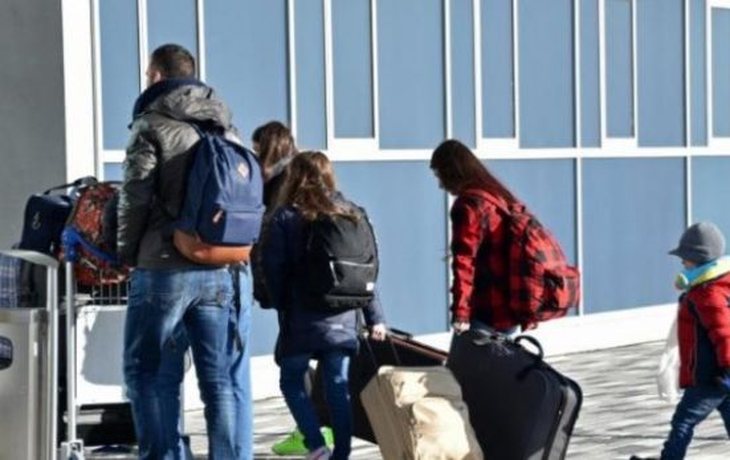
A young Toronto couple's family vacation quickly turned into a nightmare in Albania. A W5 investigation uncovered a luggage tag swapping scheme involving innocent passengers and corrupt airport employees. It has prompted the Canadian government to issue a warning that "criminal networks are exploiting airport luggage tags to transport drugs."
“Protect yourself from baggage swaps,” the Canadian government’s advice says, “by taking clear photos or videos of your bags and attached baggage tags… before they leave your possession.”
Kristian and Adriana Gjoni watched the "W5" documentary and followed their travel advice from Ottawa, but still ended up in isolation in Tirana, Albania.
Their ordeal began this summer, when the couple flew on one of Air Transat's first direct flights from Toronto to Tirana to share the news with family in Albania that they were expecting their first child.

Shortly after they landed, an Albanian customs officer asked why one of their four bags was missing a tag. “And I said, ‘I’m not an employee of Pearson or Air Transat,’” Kristian said. “How would I know?”
The couple was detained for two and a half hours, until an officer took Christian to the baggage carousel and ordered him to pick up a bag that had been left alone and was still spinning.
Kristian, an IT businessman originally from Albania, says this wasn't in his plan. But it didn't matter.
An officer opened the single bag, which was filled with 23.15 kilograms of cannabis. Authorities quickly got out their cameras.
"Think about the red carpet in Hollywood, where you have hundreds of people taking pictures around and a single suitcase opening," he said.
Luckily, Christian thought, they were prepared with photos of their luggage. It didn't work. Albanian police thought it was "extremely suspicious," Christian said.
"They asked me, 'Why did you take pictures of the bags?' And I told them, because it's been all over the news and that it poses a security risk right now in Canada," he said.
Despite Christian's protests, police rushed him to a nearby jail, where he said he spent four days in solitary confinement. His new reality was an 8-by-9-foot cell with no windows and a fluorescent light that never went out.
It was a shocking change of scenery for the Toronto businessman, who up until that point had only a few parking tickets. In an instant, he became a suspected international drug smuggler — ensnared in what Albanian police dubbed “Operation Suitcase.”

Për të qëndruar i shëndoshë mendërisht në izolim, Kristian tha se luante shah me veten në një tabelë që e kishte bërë me hirin e cigareve dhe bojën e fshirë nga muret.
Për ta përkeqësuar situatën, Adriana u dërgua në një spital lokal me dhimbje të forta. Mjekët atje kryen një rezinancë me ultratinguj, por jo një analizë gjaku, dhe i thanë policisë se ajo nuk ishte shtatzënë.
Emri i Kristianit u shpërnda në shtypin shqiptar, së bashku me një akuzë nga policia se ata gënjyen për shtatzëninë.
Kristian “dyshohet se u përpoq të shmangte inspektimin duke pretenduar se gruaja e tij ishte shtatzënë”, thuhet në një artikull. “Ekzaminimet mjekësore më vonë përcaktuan se pretendimi ishte i rremë, thanë autoritetet.”
“Pra, i gjithë rrëfimi u ndërtua para se të na merrnin në pyetje dhe madje iu shpërnda edhe shtypit”, - tha ai. “Lajme, stacione televizive, media sociale, kudo.’

Ndërkohë, ndërsa Kristian ishte ende në burg, Adriana u lirua nga masa e emergjencës dhe u kthye në paraburgim policor. “Ajo që më ndihmoi ta përballoja ishte: “Do të dal. Të paktën do të kemi ende familjen tonë. Do të kemi fëmijën tonë”, tha ai.
Ata e nxorën Adrianën nga spitali 12 orë më vonë — por në atë kohë, ajo ndihej përsëri keq dhe u dërgua me urgjencë në një spital tjetër. Një analizë gjaku atje vërtetoi se ajo ishte shtatzënë, por ishte tepër vonë. Adriana pati një abort.
“Ë5” ka parë dokumentet e spitalit në Toronto dhe në Shqipëri që konfirmuan shtatzëninë e Adrianës dhe abortin e saj. Kristian beson se bagazhet e kaluan shkakun e kësaj.
“Ende nuk e kemi kapërcyer”, tha ai. “Nuk mendoj se do ta kapërcejmë ndonjëherë plotësisht”.
Një tjetër pasagjere kanadeze në fluturim u ndalua gjithashtu sepse etiketa e saj ishte në një valixhe tjetër me 23 kilogramë kanabis. Ajo u lirua pa akuza. Në përgjithësi, kanabisi vlente pothuajse 400,000 dollarë kanadezë, tha policia shqiptare.
Përfundimisht, Kristian u lirua nga burgu me kusht pasi avokati i tij paraqiti prova që përfshijnë dhjetëra lidhje me raportimin e Ë5 mbi ndërrimin e etiketave të bagazheve dhe korrupsionin në Aeroportin Pearson.
Ai është kthyer në Toronto, por duhet të kthehet rregullisht në Tiranë për t'u paraqitur në polici. Fillimisht, autoritetet kërkonin një paraqitje mujore, por kohët e fundit ky rregull është zbutur në një herë në 4 muaj.

Ë5 shkoi me Kristianin muajin e kaluar për një nga këto udhëtime. Pas një udhëtimi 12-orësh, procesi i regjistrimit zgjati vetëm disa minuta. Një oficer shkroi emrin e tij në një libër dhe Kristiani ishte i lirë të largohej.
Kristian ka punësuar avokatin Ndue Pjetra, i cili tha se argumentet e tij ligjore do të huazojnë shumë nga raportimi i W5 mbi ndërrimin e etiketave të bagazheve. Pjetra i ka paraqitur gjykatës informacione në lidhje me “shqetësime serioze në lidhje me sigurinë në aeroportet kanadeze”.
He will also have a helpful letter from the Mountie family. RCMP said they have verified that the couple only registered the 4 bags they took and agree with Christian's version of events.
"The RCMP believes you were the victim of a luggage tag swap incident, where the luggage tag from your checked suitcase was placed on a suitcase that you did not check in," an officer wrote to Christian in October.

Albania is a country known for its corruption, Kristian noted. “But I never thought I would have to travel here again because of corruption… inside Canadian airports.”
Christian’s trial is expected to begin in early 2027. He faces up to 15 years in prison. An Air Transat spokeswoman said the airline takes the allegations of tampering with the baggage system very seriously. “We understand the concern this situation has caused Mr. John and his family,” Stéphanie Dussault said. “While airlines are responsible for transporting checked baggage,” the baggage system also involves “airport authorities, security partners and government agencies,” she noted.
A Government of Canada website advises travelers to take pictures of their luggage with luggage tags.
How does tag switching work?

A corrupt employee smuggles a bag of drugs into an airport, removes the tag from an unsuspecting passenger's luggage, and attaches it to a suitcase full of drugs. If the bag of drugs makes it, a "mule" (courier) waiting at the destination takes it. If not, the innocent passenger must explain himself. ©LAPSI.al